
 Trading Guides
$20 Trade Up Challenge: Your Guide to a Bigger Life
Think you need a fortune to get what you want? Think again. Your guide to starting with a $20 item and trading your way to your ultimate dream goal is right here.

You Don't Need Money. You Need a Mission.
Forget everything you think you know about wealth. You don’t need a trust fund to land a Rolex. You don’t need a six-figure salary to park a new car in your driveway. You need a starting item and a strategy. Welcome to the $20 trade up challenge.
This isn't just a fleeting social media trend. It’s a powerful, real-world quest that turns everyday items into life-changing assets. It’s the modern evolution of the legendary one red paperclip story, supercharged for a digital world. One guy, Kyle MacDonald, started with a simple office supply and, one year and fourteen trades later, owned a two-story farmhouse.
He didn't have a magic wand. He had a simple, repeatable system. And now, you have this guide. We’re going to break down the exact blueprint for starting your own bartering challenge, from picking your first $20 item to navigating the trades that will take you to the top. This is where your journey from a small item to a massive goal begins.
What Exactly is the $20 Trade Up Challenge?
The concept is brutally simple: you start with a single item worth around $20. Your one and only goal is to trade that item for something of slightly higher value. Then you trade that new item for something else of even higher value. You repeat this process, climbing the value ladder one smart swap at a time, until you reach your ultimate prize.
Think of it as a real-life video game. You’re on a quest, and each trade levels you up. The goal isn’t just to make small, incremental gains. The goal is to make strategic leaps toward a big-ticket item you’ve defined from the start. Your “final boss” could be anything: a down payment for a house, a dream vacation, a classic car, or that designer watch you’ve been eyeing. See what others are aiming for on our Dreams landing page.
This challenge taps into a core human desire: the hustle. The thrill of the chase. It’s why the TikTok trade up challenge exploded. It’s not just about acquiring stuff; it’s about the story you create, the people you meet, and the skills you develop along the way. You learn negotiation, valuation, and marketing on the fly. And with an app like Flipuz, you have a platform designed to make this entire process faster, safer, and more fun than ever before.
The Rules of the Game: Your Blueprint for Success
To win, you need to know the rules. These aren't limitations; they are your framework for making smart, strategic decisions. Internalize them, and you'll leave amateur traders in the dust.
Rule 1: Start Small, Think Big
Why $20? It’s the perfect launchpad. It’s low-risk—if your first trade is a bust, you’re only out twenty bucks. But it’s also just enough value to get you an item people actually want. Starting with something too cheap (like a literal paperclip today) is a slow grind. Starting too expensive creates pressure and shrinks your pool of potential traders. The $20-$50 range is the sweet spot. Unsure where to start? Check our guide to the best starter items for a trade up.
Rule 2: Value is Subjective
This is the single most important concept you need to grasp. The item you have is only worth what someone else is willing to trade for it. Your “useless” $20 vintage camera sitting in a closet could be the exact prop a local photographer needs for a $100 photoshoot. Your job is to find that person. Value is a perception, a story, a solution to a problem. Your mission is to find the gap between how you value your item and how someone else values it, and exploit that gap for profit.
Rule 3: Document Everything
The story is half the value. From your very first trade, take clear, high-quality photos. Post updates. Share your progress. When you approach someone for a trade, you’re not just offering an item; you’re inviting them to be part of your epic journey. “Help me trade this PlayStation 4 up to a car” is a much more compelling pitch than “Wanna trade?” Your story builds hype, creates social proof, and attracts bigger and better offers.
Rule 4: No Cash Allowed
This is a bartering challenge. The spirit of the game is to trade item-for-item. Introducing cash complicates things and turns it into a simple resale business. Stick to pure trades. It forces you to be more creative and keeps the challenge authentic. The only exception might be a “trade plus cash” offer you receive, but the goal should always be to swap goods directly.
Rule 5: Be Patient and Persistent
This is not a get-rich-quick scheme. It's a marathon, not a sprint. Kyle MacDonald's journey took a full year. You will hit plateaus. You will get rejected. You might even make a bad trade that sets you back. It’s part of the process. Persistence is what separates the winners from the people who give up after three trades. Stay focused on your end goal and celebrate the small wins along the way.
Your First Moves: From $20 to $100
The early game is all about building momentum. Getting those first few successful trades under your belt proves the concept and fuels your motivation. Here’s how to execute your opening strategy.
Brainstorming Your Starter Item
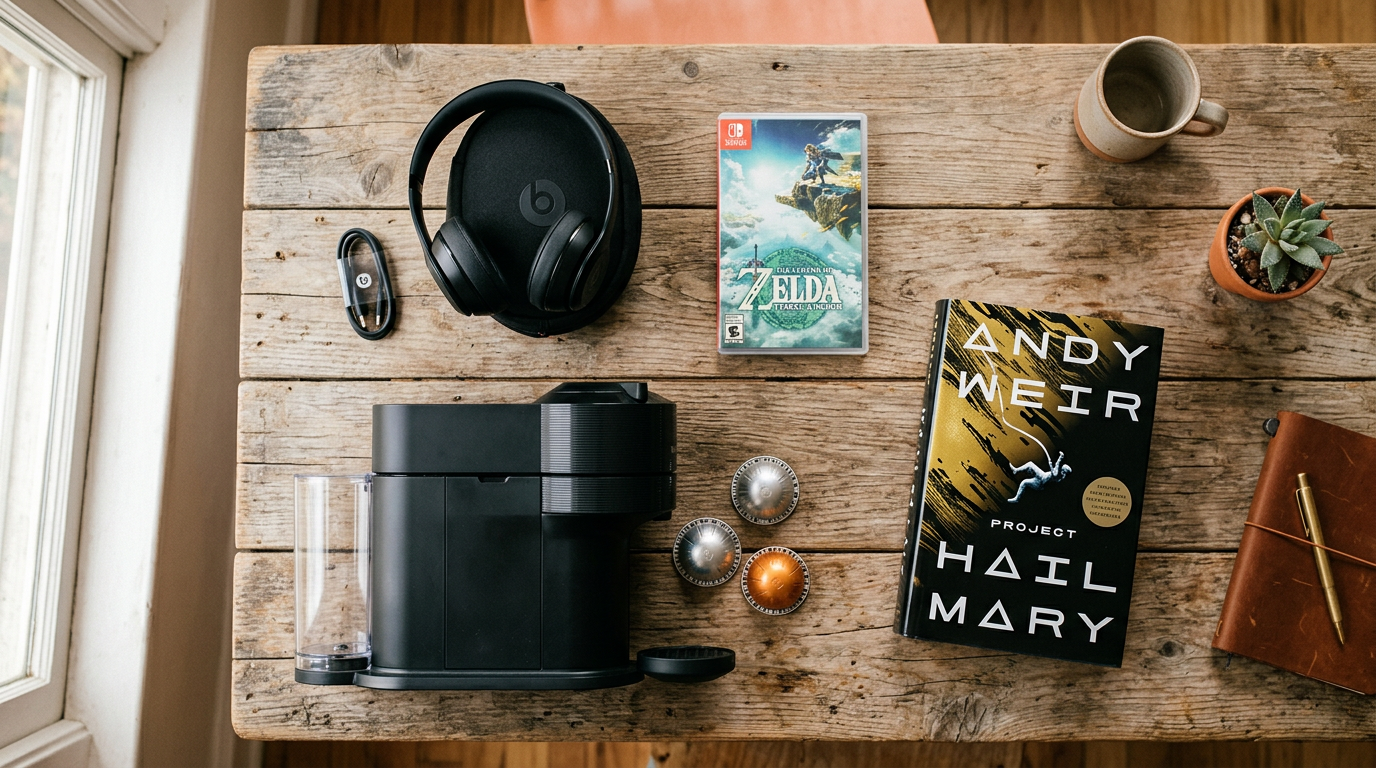
Your first item is critical. You want something with broad appeal that’s easy to value and transport. Steer clear of things that are too niche, too large, or in poor condition.
Excellent Starter Items:
- Electronics: A good pair of headphones (Beats, Sony), a Bluetooth speaker (JBL, UE), a popular video game, or a streaming device (Apple TV, Roku).
- Small Appliances: A brand-name coffee maker (Keurig, Nespresso), a blender (Ninja, NutriBullet), or an air fryer in good condition.
- Tools & Gear: A solid toolkit, a popular brand-name cooler, or quality camping equipment.
Your goal is liquidity. You want an item that a lot of people could see themselves using. This maximizes your pool of potential trade partners right from the start.
Finding Your First Trade
Once you have your item, you need a marketplace. You could go the old-school route with Craigslist or Facebook Marketplace, but be prepared for a slog. You'll face lowballers, endless scrolling, no-shows, and the inherent safety risks of meeting strangers from unverified profiles.
Or, you can skip the headache. You can use a platform built for exactly this. This is where Flipuz comes in. Forget posting an ad and waiting. On Flipuz, you just swipe through items you’re interested in. If the other person swipes on your item, it’s a match. You only chat with people who are already interested in a trade. It’s efficient, gamified, and cuts out 90% of the noise. This is your unfair advantage in any how to start a trade up challenge quest.
Making the Pitch
When you find a potential trade, don’t just send “trade?” Craft a confident, clear pitch. Your photos should be bright and show the item from all angles. Your description should be honest about the condition and powerful in its narrative.
Lead with the story: “Hey, I’m on the $20 trade up challenge, and I’m looking to trade my JBL Bluetooth speaker. I saw your Fitbit and think it would be a great next step on my journey. Let me know if you’re interested in being part of the story!” This approach is disarming, intriguing, and dramatically increases your chance of getting a “yes.”
Scaling Your Trades: The Mid-Game Strategy
Once you’ve successfully traded up into the $100-$500 range, the game changes. You’re no longer dealing with impulse items; you’re trading assets with real, tangible value. Your strategy needs to evolve.
Identify High-Potential Items
At this stage, look for items that hold their value well or can be easily improved. Think bigger electronics (TVs, laptops, game consoles), brand-name power tools, small vehicles (scooters, e-bikes, dirt bikes), or collectibles with a proven market. Research each trade. A quick eBay search of “sold listings” can give you a real-world valuation for a potential item, preventing you from making a bad deal.
Master the “Value Add”
This is how pro traders create value out of thin air. You trade for a dusty, slightly scuffed mountain bike. You spend an afternoon cleaning it, tuning the gears, and taking stunning photos of it gleaming in the sun. You just added $100 in perceived value without spending a dime. The same goes for electronics (restoring to factory settings, cleaning), furniture (a quick coat of paint or new hardware), or any item that can be improved with a little elbow grease.
Leverage Your Growing Story
By now, you should have a chain of successful trades. This is your resume. Showcase it. On Flipuz, your profile can become a living document of your challenge. Post updates, show your trade history, and clearly state your ultimate goal. People are more willing to trade a high-value item if they see you’re serious, successful, and on a legitimate quest. It makes them feel like they are contributing to something bigger. This is the core psychology of trading up.
Ready to put these strategies to the test? Stop reading and start doing. Download Flipuz and begin your trade up challenge today.

Avoiding Pitfalls on Your Journey
The path to a house from a paperclip isn't a straight line. There are traps along the way that can derail your progress. Here’s how to spot them and walk right past them.
Scams and Bad Faith Traders
As your item value increases, so does the attention from scammers. Be wary of anyone offering a trade that seems too good to be true. Red flags include refusing to meet in a safe, public place, pushing for personal information, or offering a brand new, high-value item for your much lower-value one. This is where using a dedicated platform helps. Flipuz has community guidelines and user verification to help create a more trustworthy environment. Always follow basic safety protocols for every trade.
The “Value Trap”
Beware of getting stuck with an item that is technically valuable but has a very small, niche market. Think of a rare but obscure antique, a piece of specialized industrial equipment, or a collectible that only three people in the state care about. It might be “worth” a lot on paper, but if you can’t find a buyer or trader, its effective value is zero. Stick to items with broad appeal, especially in the mid-game.
Losing Momentum
Everyone hits a wall. You’ll have a desirable item but no good trade offers for weeks. You’ll feel stuck. This is where most people quit. To push through, stay active in the community. Check out the Flipuz Trading Leaderboard to see what other power traders are swapping. Seeing their success can provide the spark you need. Sometimes, a “sideways” trade—swapping for an item of similar value but higher liquidity—is the perfect move to get the wheels turning again.
Flipuz: Your Secret Weapon for the Challenge
You can absolutely attempt the $20 trade up challenge using old-school methods. You can also build a house using a hammer and a handsaw. But why would you, when a full set of power tools exists?
Flipuz is your power tool for bartering.
Traditional trading is bogged down by friction:
- Endless Scrolling: Wasting hours on platforms not designed for bartering.
- Cold Messaging: Sending dozens of offers into the void with no response.
- Safety Concerns: Meeting unverified strangers in sketchy parking lots.
- No Narrative: Your story gets lost in a sea of generic listings.
Flipuz solves all of this:
- Gamified Swiping: We turned finding trades into a fast, fun, and addictive experience. You’ll find potential trades in minutes, not hours.
- Double Opt-In: You only talk to people who are already interested in your item. No more wasted time.
- Zero Fees: Flipuz is 100% free. All the value you generate stays in your pocket, fueling your next trade.
- A Community of Traders: You're surrounded by people on the same mission. It's a place to find inspiration, see what’s possible, and track your rise.
The $20 trade up challenge is waiting for you. The path has been laid out. The tool is in your hands.
The only thing missing is you. Sign up for Flipuz and make your first trade in the next 10 minutes.
FAQ
What's the best item to start a $20 trade up challenge with?
Start with something that has broad appeal, is in good condition, and is easy to transport. Think popular consumer electronics like a good Bluetooth speaker or headphones, a recent and popular video game, or a small kitchen appliance from a well-known brand like Keurig or Ninja. These items have a large pool of potential traders, giving you the best shot at a quick and successful first swap.
How long does a trade up challenge usually take?
There's no set timeline. The famous red paperclip-to-house trade took one year. Your journey depends entirely on your goal, how aggressively you pursue trades, your strategy, and a bit of luck. Instead of focusing on speed, focus on making consistent, smart trades. The progress will compound over time, whether it takes six months or two years.
Is the $20 trade up challenge legal and are there taxes?
Yes, bartering is a perfectly legal form of commerce between individuals. However, when you start dealing with very high-value items (like cars, boats, or property), there can be tax implications. The IRS may view a barter exchange as a taxable event. We always recommend consulting with a tax professional when your trades start reaching significant values to ensure you're compliant with local laws.
Can I really trade up to a car or a house?
Yes. It is the ultimate achievement of the trade up challenge, and it has been done. Reaching goals like a car or a house requires immense dedication, savvy trading, and a compelling story that makes people want to participate. It's not easy, but it's not impossible. Flipuz is the platform that helps you build that story and connect with traders for items both big and small, helping you turn that initial $20 item into the key to your dream.
Stop reading. Start trading.
Pick a dream — house, car, Rolex, MacBook. Drop a starter item. Swipe. Flipuz handles the rest.