
 Trading Guides
The $20 Trade Up Challenge: Your Ultimate Guide
Forget the red paperclip. The $20 trade up challenge is the new way to score big. Here's your complete guide to starting, strategizing, and winning.

You’ve seen the videos. You’ve read the stories. Someone starts with a worthless trinket and, through a series of clever swaps, ends up with something incredible. A car. A house. A life-changing prize. It’s not magic. It’s the raw power of bartering, and it’s more accessible than ever.
But forget the bobby pin. Forget the penny. The game has evolved. Today, the real action starts with the $20 trade up challenge.
This is your definitive guide to that challenge. We’re not just talking theory. We’re giving you a concrete, step-by-step playbook to turn a single twenty-dollar bill into your ultimate goal. Stop watching from the sidelines. It’s time to get in the game.
The Origin Story: From Paperclip to Global Phenomenon
To understand the $20 challenge, you have to look back at the master. In 2005, a Canadian blogger named Kyle MacDonald looked at a single red paperclip on his desk and asked a simple question: could he trade it for something bigger and better?
Fourteen trades later, he had a house. The journey from a paperclip to a fish-shaped pen, to a doorknob, to a snowmobile, and eventually to a two-story farmhouse became a global inspiration. The red paperclip trade proved a powerful concept: you don't need money to acquire assets. You need creativity, persistence, and a willingness to ask for the trade.
Fast forward to today. TikTok, Instagram, and YouTube have become the new trading floors. The challenge format is perfect for social media: it's visual, has a clear narrative, and a built-in sense of progression. But the new generation of traders learned a key lesson. Starting with a paperclip is poetic, but it’s a slow, grinding process. To get to the exciting trades faster, you need a better starting point. That’s where twenty dollars comes in.
Why $20? The Strategic Sweet Spot
Starting with a twenty-dollar bill is the ultimate hack for the trade up challenge. It's the perfect sweet spot between being accessible to everyone and having enough initial value to jumpstart your journey.
Think about it. What can you get for a paperclip? A pen? Maybe. The first few trades are a struggle against literal worthlessness. But what can you get for $20?
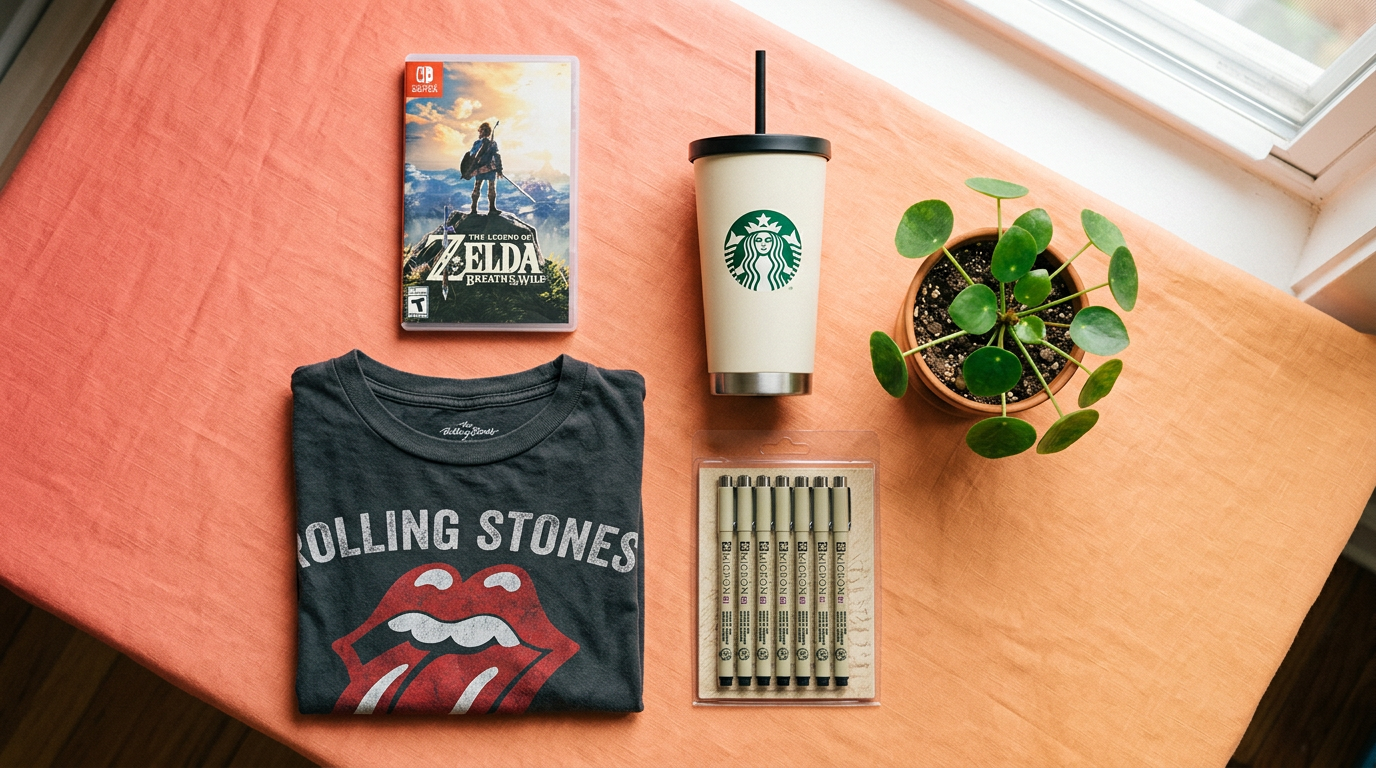
- A popular, used video game.
- A vintage band t-shirt from a thrift store.
- A barely-used kitchen gadget like a coffee frother or mini-waffle maker.
- A best-selling hardcover book.
- A set of high-quality art supplies.
With a $20 bill, you buy your first asset. This isn't just an item; it's your ticket into the game. You immediately have something another person might actually want. You skip the first 3-4 tedious trades and jump directly into the mid-game, where strategy begins to matter more than just finding someone willing to take a near-worthless item off your hands. It’s a strategic decision to accelerate your path to high-value items.
Your Game Plan: How to Win the $20 Trade Up Challenge
Success in this challenge isn’t about luck. It’s about following a proven strategy. Here is your step-by-step plan. Don't skip a single one.
Step 1: Find Your $20 Starter Item
Your first move is your most important. Go buy an item with your $20. The goal is to find something with high “trade velocity”—an item that is in-demand and easy to swap. You need something people are actively searching for. Check out our full list of the best starter items for a trade up, but here are a few ideas to get you started:
- Electronics: Think used-but-excellent condition items like a Nintendo Switch game, a popular smart home device (like a Google Nest Mini), or quality Bluetooth headphones.
- Hobby Gear: A skateboard deck, a yoga mat, a set of disc golf discs, or a popular board game. Target items people use for their passions.
- Fashion: A vintage jacket, a sought-after pair of sneakers from a thrift shop, or a brand-name accessory like a Herschel backpack. Condition and brand recognition are key.
- Home Goods: A small, popular kitchen appliance like a Nespresso machine or an Instant Pot found on sale or secondhand. Perceived value here is often much higher than the actual cost.
Choose wisely. Your goal is to get an item that someone will see and immediately think, "I want that."
Step 2: Document Your Journey
This is non-negotiable. You are not just a trader; you are a storyteller. Create a dedicated TikTok, Instagram, or YouTube account for your challenge. Your first post: you, holding the $20 bill and your starter item. Announce your mission.
Your goal is a car. Or a Rolex. Or a down payment for a house. State it.
Every trade is a new chapter in your story. Document the item, the trade negotiation (within reason), and the successful swap. Why? Because a story builds social currency. People will trade with you not just for your item, but for the chance to be part of your journey. It turns a simple transaction into a memorable event. They get to say, "I was trade #4 in the challenge that ended with a Tesla." That's a powerful incentive.
Step 3: Master the Pitch
When you propose a trade, you aren’t just offering an item. You’re offering an opportunity. Frame your pitch around the story.
Don't say: "Want to trade my headphones for your tablet?" Do say: "Hey! I’m on a mission to trade this pair of Beats headphones all the way up to a car. Your tablet would be an amazing next step in the journey. Want to be a part of the story and make a legendary trade?"
See the difference? You’re selling the sizzle, not just the steak. You're giving them a chance to be a hero in your narrative. This approach elevates your item's value beyond its dollar amount.
Step 4: Find Your Trading Arena (Hint: It’s Flipuz)
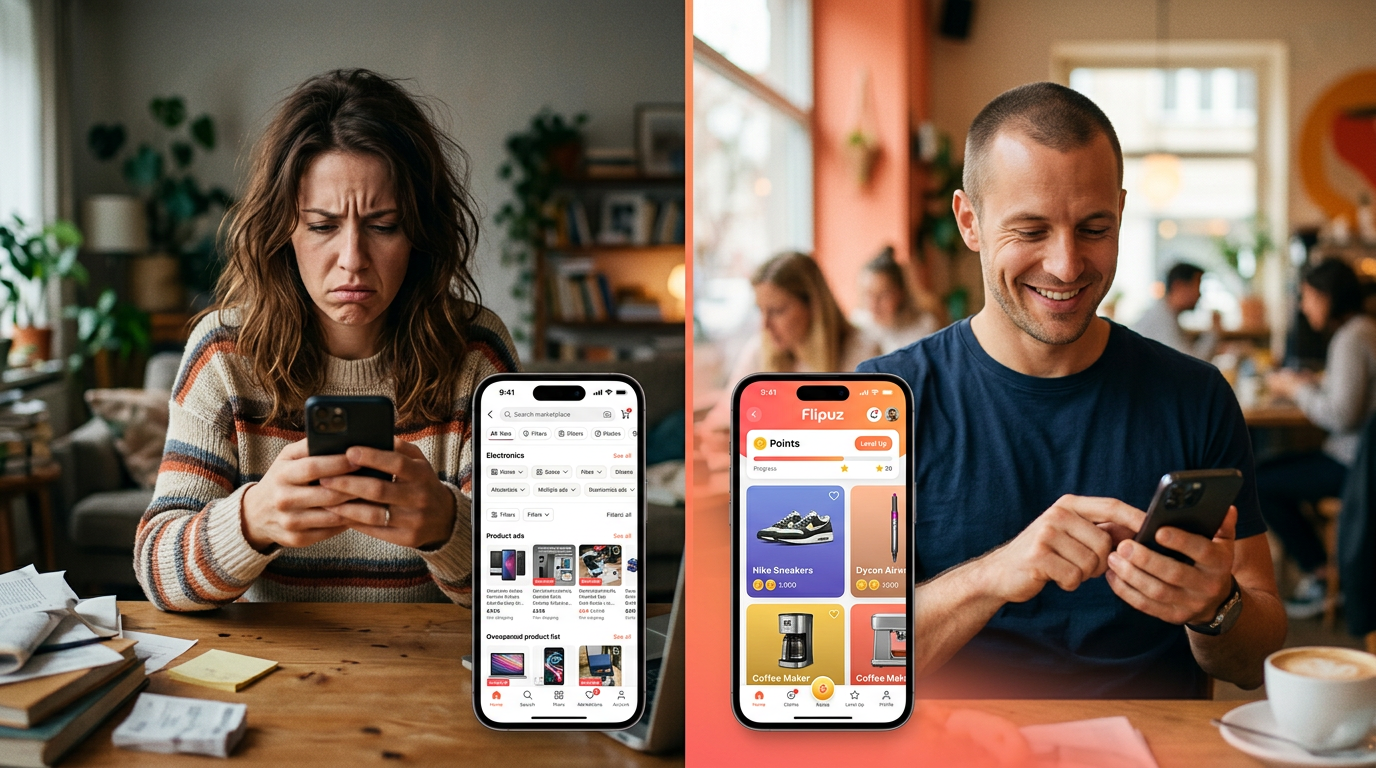
Where you trade matters. You could try Facebook Marketplace or Craigslist, but you'll be swimming against the current. Those platforms are designed for cash transactions. People there are conditioned to lowball, haggle over pennies, and ghost you. They aren’t built for the art of the trade.
This is where you need a dedicated tool. Flipuz is a gamified marketplace built from the ground up for one thing: trading items. No cash allowed. No fees.
On Flipuz, everyone is there for the same reason you are—to trade up. You simply upload your item, state your goal, and start swiping through items from other traders. When you match, you chat and coordinate the swap. It’s a community of ambitious traders, not stingy buyers. We also enforce community rules and prioritize user safety, so you can trade with confidence.
Stop trying to barter in a cash-first world. Get on the platform designed for your mission.
Step 5: Make the Smart Flip
Evaluating a trade offer is an art. It’s not always about a linear increase in dollar value. Sometimes, a sideways trade or even trading down is the right move. Ask yourself these questions:
- Is the new item more desirable? A clunky, outdated DSLR camera might be worth $300, but a hot-ticket $250 item like a new-in-box Oculus Quest 2 is a much better asset for your next trade.
- Is it easier to trade/ship? Swapping a giant piece of furniture for a smaller, high-value electronic can be a huge win, as it opens up your potential trading partners from local to nationwide.
- Does it appeal to a passionate niche? A rare comic book or a signed piece of memorabilia might be your key to a massive jump in value if you find the right collector.
Understanding the psychology of trading up is crucial. You're trading for potential, not just for the sticker price.
Common Pitfalls (And How to Dodge Them)
Your journey won't be a straight line up. You will hit roadblocks. The winners are the ones who anticipate them and push through.
Getting Stuck with a "Dud" Item
It happens to everyone. You make a trade, and your new item is a brick. It gets no offers, no interest. Don't panic. First, improve its presentation. Take professional-looking photos in good lighting. Write a killer description that focuses on its benefits. Try bundling it with a smaller, related item to create a more attractive package. If it still won’t move, be willing to make a lateral trade for something with more demand, even if it's a slight dip in monetary value. Momentum is more valuable than holding onto a dud.
Losing Motivation
After a week with no good offers, it’s easy to get discouraged. This is where your documentation and community come in. Re-watch your old videos. Look how far you’ve come. On Flipuz, keep swiping and browse the leaderboard for inspiration. See what others are successfully trading. The right trade is just one swipe away. Stay active, stay visible, and stay hungry.
Ignoring Perceived Value
This is the rookie mistake. You get fixated on the MSRP (Manufacturer's Suggested Retail Price) of an item. A $500 TV is not always better than a $300 drone. The TV is a commodity. The drone is a toy that sparks imagination and desire. Perceived value is what someone is willing to trade for an item, not what a store says it's worth. Learn to identify items that have high perceived value to specific groups. That’s how you make exponential leaps.
The Challenge Is Just the Beginning
The $20 trade up challenge is an incredible way to acquire a high-value asset. But more than that, it’s a masterclass in negotiation, marketing, and value creation. The skills you learn are for life.
Why stop at one challenge? Flipuz is built for continuous trading. You can set multiple dream goals and work towards them simultaneously. Trade your old guitar for a new mountain bike. Swap your video game collection for a weekend getaway. Once you master the art of the trade, you unlock a new way of living—a life where you get what you want based on your ingenuity, not just the size of your bank account.
So, what are you waiting for?
The theory is over. It's time to act. Your $20 trade up challenge starts now.
Start your first trade on Flipuz in the next 5 minutes.
FAQ
What's a good starter item for a $20 trade up challenge?
A great starter item has high demand and strong brand recognition. Think popular electronics like a used Nintendo Switch game, a smart speaker, or good headphones. Lifestyle items like a Stanley Quencher or a trendy backpack also work well. The key is to pick something that people are actively looking for.
Is the trade up challenge legal and safe?
Absolutely. Bartering is a legal form of commerce. As for safety, it's about trading smart. Always trade in public places, and use a platform like Flipuz that has community guidelines and is designed for trading. Our platform helps connect you with other verified traders, making the process safer than anonymous marketplaces. Get more tips on our safety page.
How long does a trade up challenge take?
This varies wildly. Kyle MacDonald's original trade to a house took one year. Some TikTok challenges reach valuable items in a few months. It depends on your items, your strategy, your market, and your hustle. Don't focus on speed; focus on making smart, strategic trades.
Can I really trade up to a house?
Yes. It’s been done. It's the ultimate trading achievement. It requires immense dedication, fantastic storytelling, and a bit of luck. While a house is a monumental goal, starting a challenge with the aim of trading up to a car or a down payment is a more common and achievable high-value target for most traders.
Stop reading. Start trading.
Pick a dream — house, car, Rolex, MacBook. Drop a starter item. Swipe. Flipuz handles the rest.