
 The original trade-up
One Red Paperclip, 14 Trades, A House.
The story of the guy who traded a paperclip for a house — and the playbook that proves you could do the same thing tonight, on your phone.
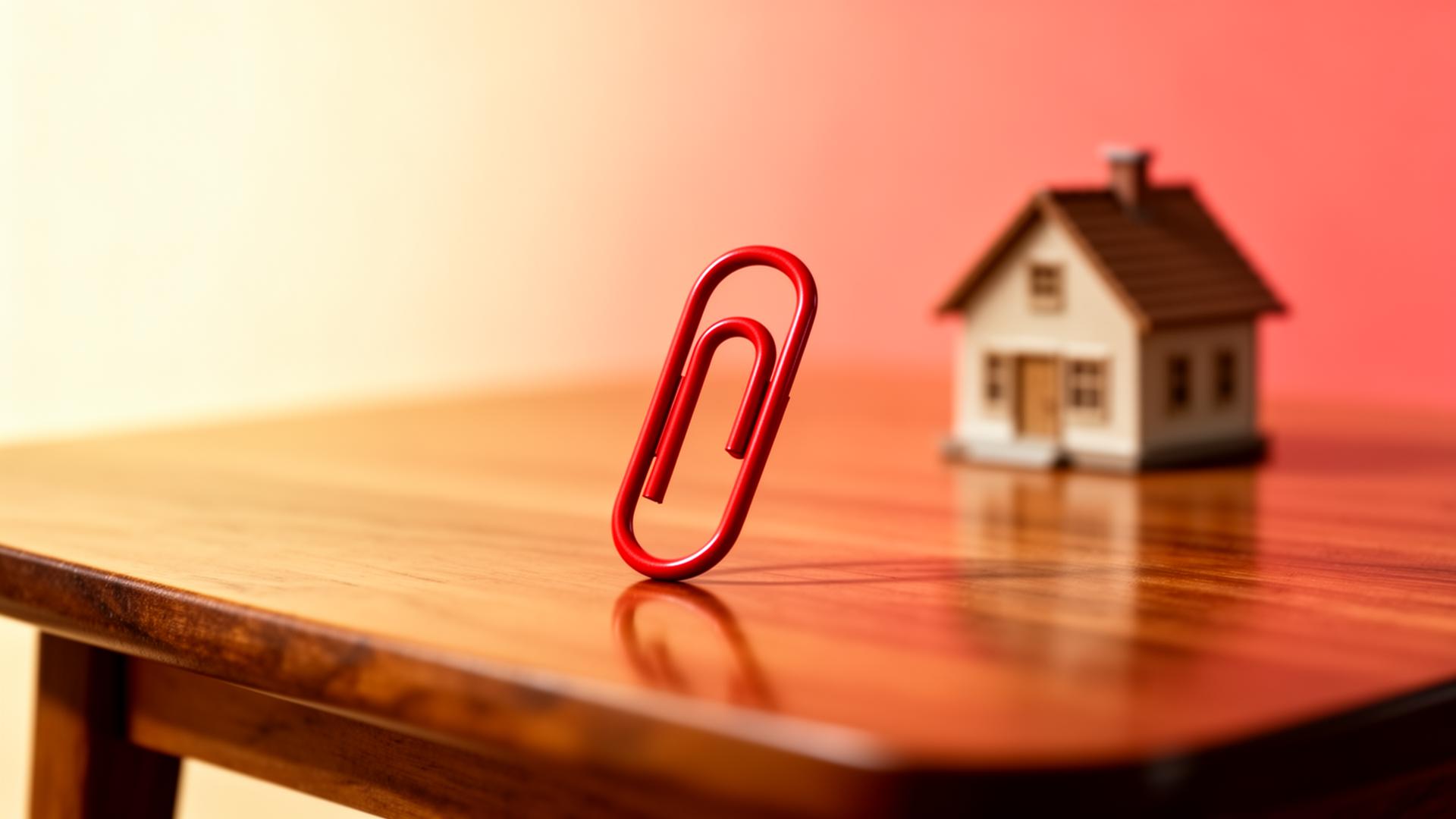
The guy who traded a paperclip for a house
On July 12, 2005, a 25-year-old Canadian named Kyle MacDonald sat in front of his laptop in Montreal and posted a photo of a single red paperclip. The pitch was simple: he wanted to trade the red paperclip for something — anything — bigger or better. Then he wanted to trade that for something bigger or better. And keep going. His goal, written half as a joke: a house.
Exactly one year and 14 trades later, on July 12, 2006, the town of Kipling, Saskatchewan handed him the keys to a two-story farmhouse at 503 Main Street. The man who traded a paperclip for a house had actually done it.
The full red paperclip trade chain (all 14 trades)
Here's every single swap Kyle made — the entire paperclip trade, start to finish. Notice how no single trade is a giant leap. It's 14 small wins stacked together.
- 11 red paperclipFish-shaped pen
Two girls in Vancouver.
- 2Fish penHand-sculpted doorknob
Seattle, traded with Annie.
- 3DoorknobColeman camp stove
Amherst, Massachusetts.
- 4Camp stoveHonda generator
Queens, NY — first big jump.
- 5Generator'Instant party' (keg + neon Budweiser sign + IOU)
Maspeth, NY.
- 6Instant partySki-Doo snowmobile
Quebec.
- 7SnowmobileTwo-person trip to Yahk, BC
All-expense paid.
- 8TripCube van
Yahk locals threw it in.
- 9Cube vanRecording contract
With Metalworks in Toronto.
- 10Recording contractA year's rent in Phoenix, AZ
Jody Gnant, musician.
- 11Phoenix rentAfternoon with Alice Cooper
Yes, that Alice Cooper.
- 12Afternoon with AliceKISS motorized snow globe
Looked like a downgrade. Wasn't.
- 13Snow globeSpeaking role in 'Donna on Demand'
Corbin Bernsen collected snow globes.
- 14Movie roleTwo-story farmhouse in Kipling, Saskatchewan
Town traded the house for the role.
Your turn
What's your trade #1?
Open your drawer. The dead AirPod case, the hoodie you never wear, the speaker you forgot about. That's a red paperclip. Drop it on Flipuz and let the swipes do the rest.
Start trading upWhy does the paperclip trade actually work?
Kyle didn't get lucky. He exploited a quiet truth that economists call subjective value: the same object is worth wildly different amounts to different people. The doorknob he traded for wasn't a $5 hardware-store knob — it was a hand-sculpted ceramic piece that meant nothing to its owner but a lot to a sculptor in Massachusetts who had a working camp stove sitting in his garage.
Every step in the red paperclip trade looked like a fair swap to both sides. Nobody got ripped off. Both people walked away holding the thing they actually wanted. That's the whole engine.
The three rules behind every paperclip-to-house chain
- Trade what's worthless to you for something useful to you. Not necessarily more "expensive" — more useful. Usefulness compounds way faster than dollar value.
- Make the next person feel like they won. Kyle's chain works because every counterparty was excited. Greed kills the chain. Generosity fuels it.
- Don't stop. Trade #1 is exciting. Trade #6 is when most people quit. Trade #14 is a house. The middle is the whole game.
The problem with copying Kyle in 2006 vs 2026
Kyle did this on a blog. He answered emails for hours every night. He drove across borders. He flew to Phoenix. He spent twelve months of his life chasing strangers in different time zones to make 14 trades happen.
That barrier is why "trade a paperclip for a house" stayed a one-off news story for 20 years. Until now, there was no app for it. People wanted to trade up — they just didn't have the rails.
The 2026 version
Trade up to a house. Or a car. Or a Rolex.
Same mechanic Kyle used. Built into an app, with a feed full of real items in your city. Pick a dream and we'll match you toward it.
How Flipuz turns the red paperclip trade into a game anyone can play
Flipuz is the trade-up app Kyle would have killed for. We took the entire paperclip-to-house mechanic and put it on your phone:
- Swipe instead of email. An endless deck of stuff people in your city are ready to flip. Right for want, left for nope. Two seconds a card.
- Match instead of negotiate. Both swipe right? It's a match. Meet up, swap, snap a proof photo. Done.
- Climb a leaderboard. Every verified flip stacks score. The whole point of the original red paperclip trade was the chase. We made it a scoreboard.
- Free forever, zero fees. No listings, no commission, no checkout. Real items, real people, real flips.
What can you trade a paperclip for today?
Anything someone in your city is bored of. We've watched users chain a $20 hoodie into a Rolex Submariner in eight flips. AirPods into a 1969 Mustang in eleven. A mechanical keyboard into a MacBook Pro in six.
The reason it works is the same reason it worked for the guy who traded the paperclip for a house: there's always someone, two zip codes away, who wants the thing on your shelf more than you do.
Popular trade-up dreams on Flipuz right now
- Trade up to a car — average chain: 11 flips.
- Trade up to a Rolex — average chain: 8 flips.
- Trade up to a MacBook Pro — average chain: 6 flips.
- Trade up to a PS5 Pro — average chain: 4 flips.
- Trade up to a house — Kyle did it in 14. Beat him.
Frequently asked questions about the paperclip trade
Who is the guy who traded a paperclip for a house?
Kyle MacDonald, a Canadian then living in Montreal. He started the challenge on July 12, 2005 and finished it exactly one year later with a two-story farmhouse in Kipling, Saskatchewan.
How many trades did it take?
14 trades over 365 days. See the full chain above.
Was the man who traded the paperclip for a house real?
Yes — every trade was documented, photographed, and verified by local press. He later wrote a book about it called One Red Paperclip.
Can I actually trade a paperclip for a house in 2026?
On Flipuz? Yes — and you can do it without the year of cross-country road trips. Sign up, post your starter item (it doesn't have to be a paperclip), and start swiping. The mechanic is identical. The friction is gone.
Kyle had a blog and a year.
You have an app and a thumb.
Pick the dream. Drop the starter item. Swipe. The next time someone googles "guy who traded a paperclip for a house," it could be you.