
 Trading Tips
Gamified Marketplace: The Future of Trading Is a Game
Forget boring buy-and-sell sites. A gamified marketplace turns trading your stuff into an addictive game, letting you swap your way to big-ticket items without spending a dime.
You're Playing the Wrong Game
Let’s be honest. Scrolling through traditional marketplaces is a soul-crushing chore. You’re either lowballed by strangers for items you once loved or you’re haggling over a few bucks on something you barely want. It’s transactional, boring, and completely devoid of excitement. It's a lose-lose game designed to waste your time.
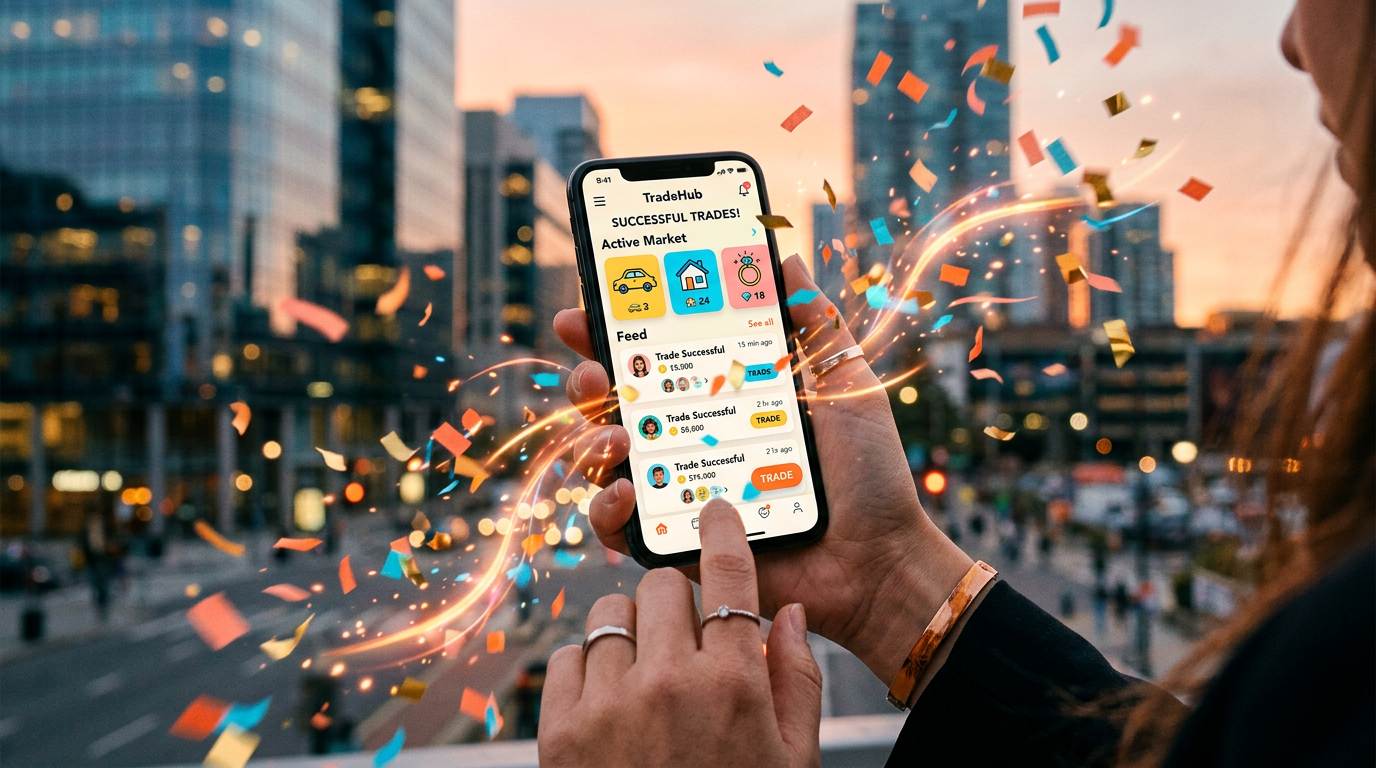
What if there was a better way? What if, instead of just buying and selling, you could play? Imagine a world where every item you own has latent potential, where a forgotten video game in your closet is the first step toward a new car. This isn't a fantasy. This is the power of a gamified marketplace.
This is the future of how we exchange value, turning the dry process of bartering into an engaging, rewarding adventure. It’s time to stop settling for stale classifieds and start playing a game you can actually win.
What Exactly is a Gamified Marketplace?
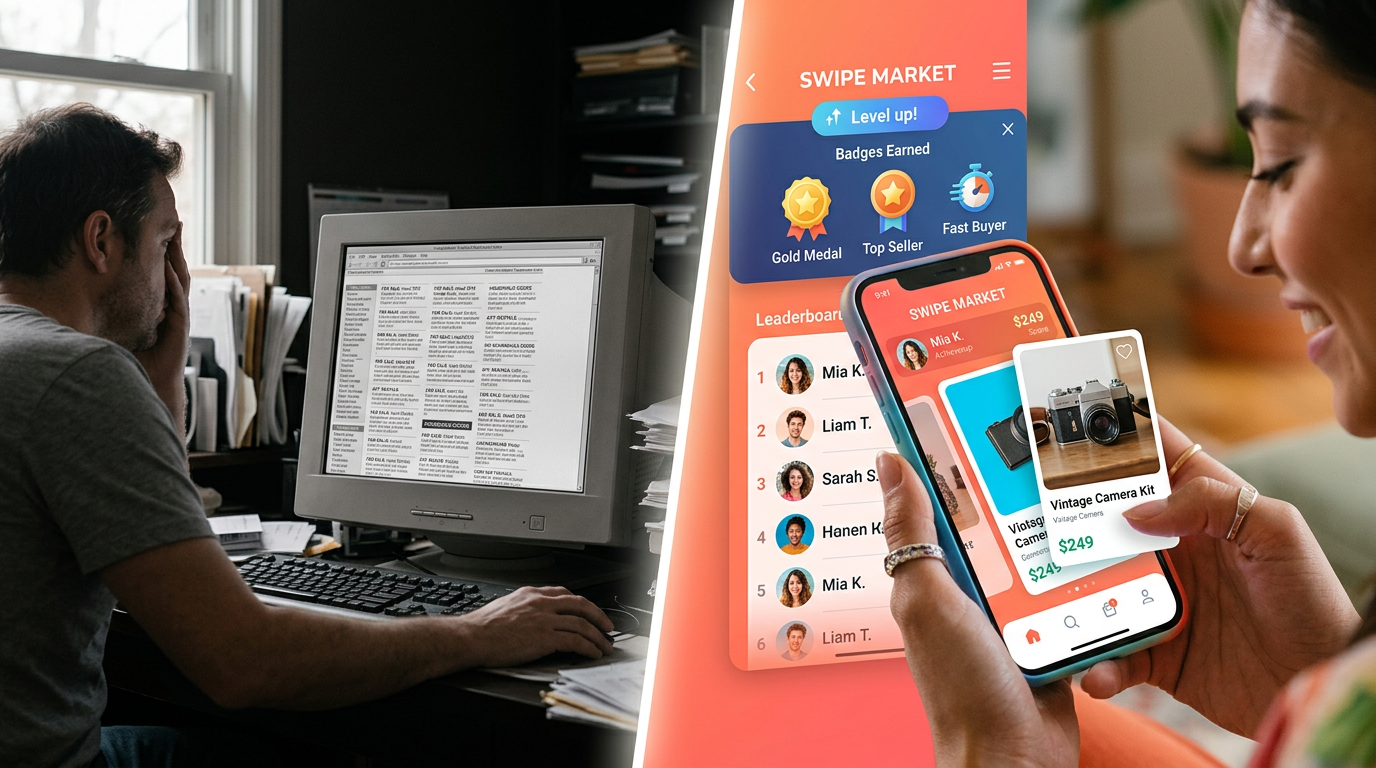
A gamified marketplace is an online platform that uses game design elements to make the user experience more engaging, fun, and rewarding. It’s not about playing video games; it’s about applying the mechanics that make games addictive—points, badges, leaderboards, and a sense of progression—to the real-world act of trading and acquiring goods.
Think of it as the difference between a textbook and a quest. A traditional marketplace is a textbook: a dense, functional, and uninspired catalog of items. A gamified platform is a quest. You start with a small, seemingly insignificant item and embark on a journey of strategic trades, aiming for a legendary prize.
At its core, a gamified trading platform transforms the user from a passive consumer into an active player. You're not just shopping; you're strategizing. You're not just selling; you're leveling up. Each successful trade feels like a victory, pushing you closer to your ultimate goal, whether that’s a new laptop, a luxury watch, or even a house.
This is the evolution of peer-to-peer exchange. It taps into our innate desire for challenge, achievement, and a compelling story. Instead of a simple transaction, you get a narrative—your narrative—of how you turned something small into something incredible.
The Psychology Behind the Fun: Why Gamification Works
Why are these platforms so compelling? It's not magic; it’s psychology. Gamified marketplaces tap directly into the reward centers of your brain, making the act of trading feel inherently satisfying. Understanding this is key to mastering the game.
The core concept is explained in the psychology of trading up. Our brains are wired to seek rewards and progress. Gamification hooks into these primal drivers:
- The Dopamine Rush: Every time you get a match, complete a trade, or receive a positive review, your brain releases a small hit of dopamine. It’s the same neurochemical responsible for the pleasure you feel when you beat a video game level or get a notification on social media. This positive reinforcement keeps you coming back for more.
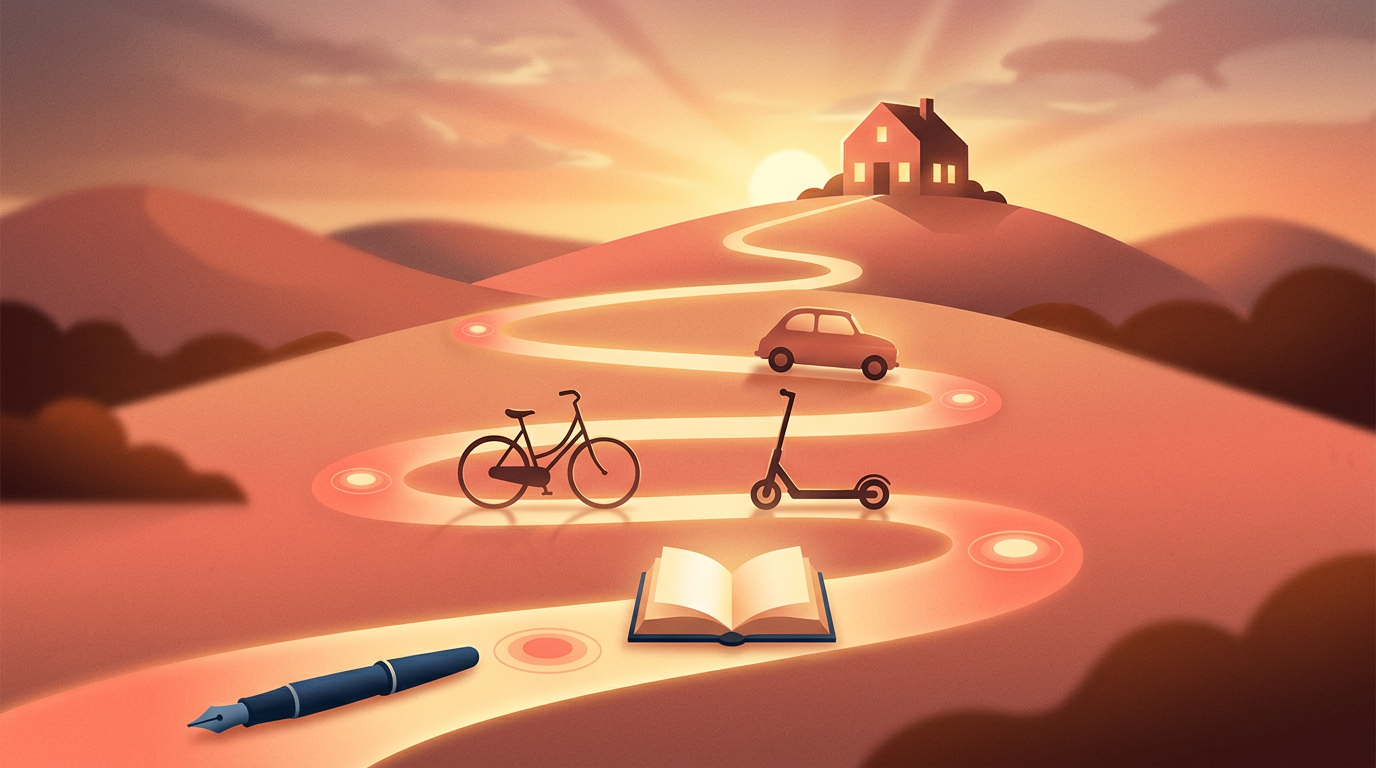
- The Power of Progression: Humans are goal-oriented. A gamified marketplace visualizes your journey. You can see how far you've come, from a simple paperclip to a collectible sneaker to a scooter. This clear sense of forward momentum is incredibly motivating. It’s not just a series of random swaps; it’s a tangible climb toward a defined goal.
- Social Status and Competition: Leaderboards and public profiles aren't just for show. They tap into our desire for social validation and competition. Seeing your name climb the trade-up leaderboard or having a profile full of successful trades builds your reputation and provides a powerful incentive to keep playing. You want to be one of the top players.
- The Endowment Effect: Once you start your trading journey, the items you acquire become part of your story. You're more invested in them than you would be in an item you simply bought. This psychological ownership makes each trade more meaningful and the final prize that much sweeter.
A gamified marketplace isn't just a gimmick. It’s a sophisticated system designed to make a necessary activity—exchanging goods—as compelling and addictive as your favorite game.
Key Features of a Gamified Trading Platform
So what does this look like in practice? A true gamified trading platform integrates specific features designed to create an interactive shopping experience. You'll recognize these from games, but here they have real-world stakes.
Swiping and Matching
Forget endless scrolling and typing. Modern platforms like Flipuz use a simple, intuitive swipe-right/swipe-left mechanic. This lowers the barrier to entry and makes browsing for potential trades fast and fun. When two users swipe right on each other's items, it's a match. This creates a moment of excitement and opens a direct channel for negotiation, turning a cold search into a mutual connection.
Points, Badges, and Achievements
These are the virtual trophies of the trading world. Completed your first trade? Badge unlocked. Traded five times in a week? You get points. These markers of achievement provide constant positive feedback and a visual record of your accomplishments. They serve as both a personal motivator and a public signal of your experience and reliability as a trader.
Leaderboards
This is where the competitive spirit comes alive. A trading leaderboard app ranks players based on metrics like the number of trades completed, the value of items traded, or the speed of their trade-up chain. It creates a public arena where the best traders are recognized, inspiring others to step up their game and learn from the pros.
Trade-Up Challenges and 'Dreams'
This is the main quest. A great gamified marketplace allows you to set a long-term goal, or a 'Dream.' Want to trade your way to a Rolex? Or maybe even a house? You set that as your target. The platform then frames your entire journey around this ultimate prize. Every trade becomes a strategic move to get you one step closer, transforming a series of swaps into an epic adventure.
Real-World Examples: From Paperclips to Porsches
The concept of a gamified trade-up isn't new. It's the digital evolution of an idea proven in the real world. The most legendary example is Kyle MacDonald's story. In 2005, he started with a single red paperclip and, through fourteen strategic trades over a year, ended up with a two-story farmhouse. You can read the full story of the one red paperclip trade to see how it happened.
Kyle didn't have a fancy app. He had a blog and a clear goal. He gamified the process for himself and his audience. Each trade was a 'level up.' The 'final boss' was the house. He proved that with creativity, persistence, and a great story, you can create massive value out of thin air.
Today, you don’t need to build your own website to do this. A dedicated item trading app like Flipuz provides the framework for you. We've taken the spirit of the red paperclip challenge and built a platform where anyone can embark on their own trade-up journey. Users on Flipuz are actively turning everyday items—like old electronics, fashion accessories, or furniture—into motorcycles, down payments, and dream vacations. It’s the same principle, supercharged by technology.
These platforms democratize the trade-up challenge. It’s no longer a one-off viral stunt; it’s an accessible, repeatable process. You have the tools, the community, and the stage to turn your clutter into your dreams.
The Flaw in Traditional Marketplaces
Why do platforms like Craigslist, Facebook Marketplace, or eBay feel so draining? Because they are built on a foundation of pure, cold transaction. They are designed for one thing: moving a product for cash. This model creates several problems that gamification solves:
- Friction and Frustration: The process is clunky. You post, you wait. You deal with endless lowball offers, no-shows, and suspicious accounts. It’s a high-friction experience that often feels like more trouble than it’s worth.
- Lack of Community: There is no sense of shared purpose. You are not a player in a game; you are a faceless user in a sea of listings. There’s no reputation system beyond a simple star rating, no camaraderie, and no story.
- Value is Capped by Cash: Your item is only worth what someone is willing to pay for it right now. In a bartering platform, value is subjective. Your old guitar might be worth only $100 in cash, but to a musician who has a camera you want, it could be worth much more. Gamified trading unlocks this hidden, subjective value.
- No Sense of Accomplishment: Selling an old chair for $20 isn’t a victory; it’s a chore. There’s no sense of progression or achievement. You just have $20 more and one less chair. There’s no narrative, no challenge, and no thrill.
Gamified marketplaces flip this script entirely. They re-inject the human elements of play, strategy, and community into the exchange of goods.
How to Win in a Gamified Marketplace like Flipuz
You're convinced. You see the potential. Now, how do you dominate the game? Trading is a skill, and like any skill, it can be learned and honed. Here’s your strategy guide.
1. Start Smart, Not Big
You don't need a valuable item to begin. The entire point is to create value. Look around your home for things you no longer use. Check out our guide on the best starter items for a trade-up for ideas. An old video game, a brand-name jacket, a kitchen appliance—these are perfect starting points. Your first trade is about getting on the board, not hitting a home run.
2. Understand Subjective Value
Stop thinking in dollar signs. The key to a successful trade is finding someone who wants your item more than you do, and who has an item you want more than they do. That's the win-win. Your goal is to trade up in perceived value with each step. Is a slightly newer, more in-demand item a better trading chip for your next move? If yes, it's a good trade, even if the cash values are similar.
3. Be Patient and Persistent
This is a marathon, not a sprint. You won't trade a paperclip for a car overnight. Some trades will happen quickly; others will take time. The best traders are persistent. They check the app daily, actively send offers, and aren’t discouraged by rejections. Every 'no' gets you closer to the right 'yes'.
4. Craft a Killer Profile and Listings
Your profile is your player avatar. Your listings are your game pieces. Make them count. Use a clear profile picture. Write compelling, honest descriptions for your items. Take high-quality photos from multiple angles. A trustworthy profile and attractive listings make other players want to trade with you.
5. Start Your Adventure Now
The most important step is the first one. Theory is useless without action. You have the knowledge, you have the tools, and you have stuff you don't need. It’s time to put it to work.
Ready to stop dreaming and start trading? Join Flipuz a free and turn your unwanted stuff into your next big win. Your trade-up journey starts with a single swipe.
FAQ
Is a gamified marketplace just for video games?
No, not at all. A gamified marketplace uses principles from games—like points, levels, and challenges—but applies them to trading real-world items. You're not playing a fantasy game; you're trading actual physical goods like electronics, clothing, vehicles, and more.
How do I start trading if I have nothing valuable?
That's the beauty of it. You don't need something 'valuable' in a monetary sense. You just need to start. The legendary trade-up challenge started with a single red paperclip. Find something small you no longer need—a book, a kitchen gadget, a piece of clothing—and trade it for something of slightly higher subjective value. The goal is momentum, not a high-value starting item.
Are gamified trading platforms safe?
Reputable platforms prioritize user safety. On Flipuz, for instance, we have a user verification process, community-driven reviews, and clear guidelines to foster a secure environment. Always follow best practices, like meeting in public places for local trades and communicating within the app. Read more about our safety guidelines to trade with confidence.
Can you really trade up to a car or a house?
Yes, it's absolutely possible, but it requires dedication, strategy, and patience. It's the ultimate goal of the trade-up challenge. While it won't happen overnight, users are constantly making incredible trades, turning smaller items into motorcycles, boats, and down payments for cars. The journey is the game, and the big prize is the final reward for playing it well.
Stop reading. Start trading.
Pick a dream — house, car, Rolex, MacBook. Drop a starter item. Swipe. Flipuz handles the rest.