
 Trading Guides
The Ultimate Item Trading App for Your Trade-Up Dream
Forget cash. An item trading app is your key to the modern barter economy. Learn the strategy to trade junk for treasure and start your legendary trade-up journey today.
You have stuff. Stuff you don't want, don't use, and don't need. It's cluttering your garage, collecting dust in your closet, and weighing on your mind. You also have dreams. A better car, a down payment for a house, that grail Rolex you can't justify buying.
What if you could turn the first problem into the solution for the second? What if you could alchemize that clutter into capital?
This isn't a fantasy. It’s the reality of the modern barter economy, supercharged by technology. You’ve probably heard the story of Kyle MacDonald, the guy who started with one red paperclip and traded his way up to a house. It's a modern legend, a testament to creativity and hustle. But that was in 2005, using Craigslist and sheer willpower. Today, a dedicated item trading app puts that power directly into your hands.
Forget hunting through forums and dealing with flaky buyers on cash-based marketplaces. The game has changed. This is your guide to navigating the world of item trading apps and starting your own legendary trade-up journey.
What Exactly Is an Item Trading App?
Let's get one thing straight: this isn't another eBay or Facebook Marketplace. Those are platforms for selling. An item trading app is a digital platform for swapping. It’s a dedicated barter exchange app where value is exchanged, not just spent.
The core concept is beautifully simple:
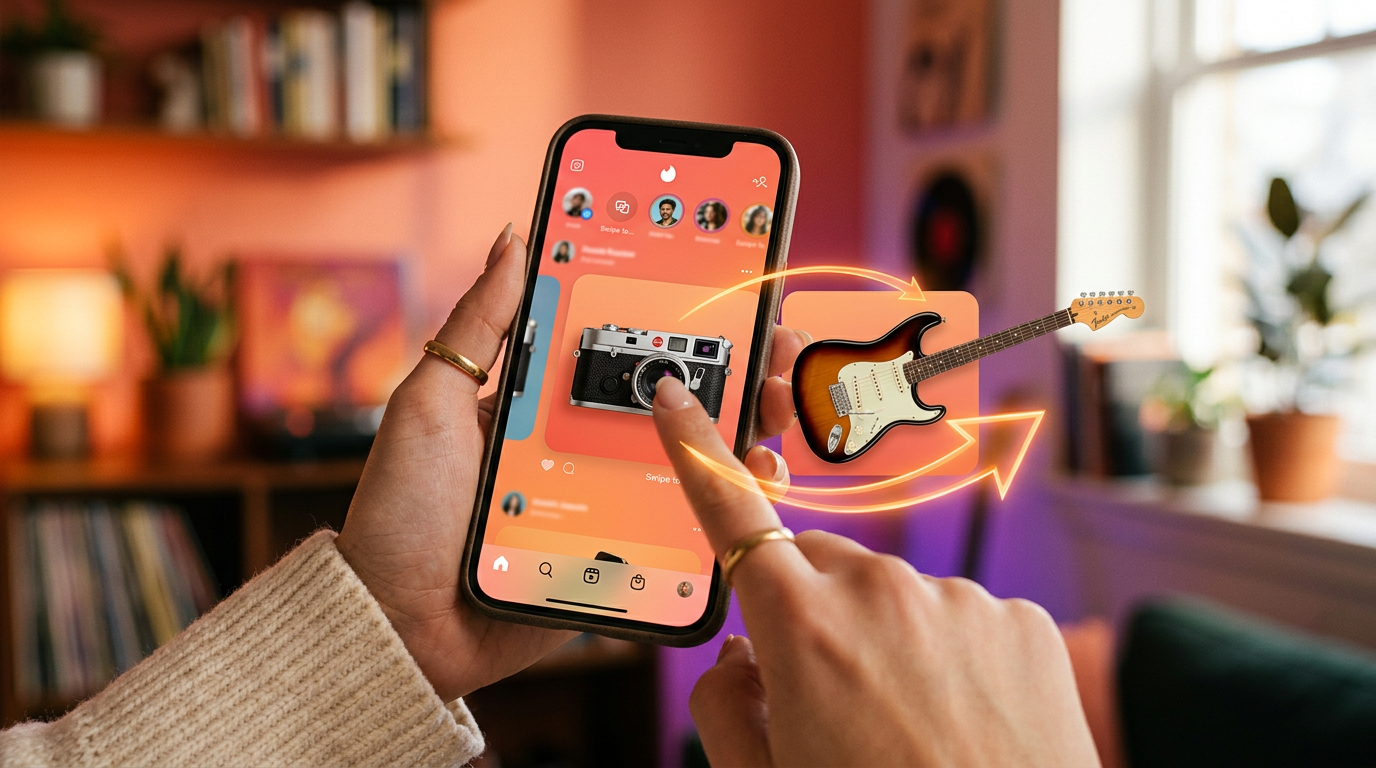
- List Your Item: You snap a few photos of that old guitar, video game console, or piece of furniture you're tired of looking at.
- Browse and Swipe: The app presents you with items from other users. You swipe right on things you'd trade for, left on things you wouldn't.
- Match and Chat: If you swipe right on an item from someone who also swiped right on yours, it’s a match. You enter a secure chat to negotiate the details.
- Swap: You meet up and exchange your items. No cash, no fees, just a pure trade.
Think of it as the digital evolution of a neighborhood swap meet, but bigger, better, and in your pocket. It’s a system built on the idea that your “junk” is someone else’s treasure, and vice versa. An item trading app connects you with a massive community of people who are specifically looking to barter, eliminating the friction of trying to propose a trade on a platform designed for cash sales.
This direct-trade model opens up a world of possibilities. You’re not limited by how much cash you have; you're only limited by your creativity and the value you can offer. For a deeper dive into the principles of bartering, check out our beginner's guide to bartering.
The Psychology: Why We're Obsessed with Trading Up
The appeal of a trade up app goes far beyond just getting new things. It taps into something primal in our psychology. It’s about the journey, the story, and the thrill of the chase. No one tells an exciting story about clicking “buy now.” But trading a paperclip for a house? That’s a legend.
The famous red paperclip trade wasn't just a series of transactions; it was a narrative. Each trade added a chapter to the story, building momentum and value. Using an item trading app allows you to create your own story. You’re not just a consumer; you're a strategist, a negotiator, a treasure hunter.
Here’s what’s happening in your brain during a trade-up challenge:
- The Dopamine of the Match: The simple act of swiping and getting a match provides a small, satisfying reward that keeps you engaged. It’s the modern equivalent of finding a hidden gem at a flea market.
- The Endowment Effect: You naturally place a higher value on things you own and have put effort into. When you successfully trade an item you've had for a while for something better, the sense of accomplishment is magnified. You didn't just get a new item; you earned it through clever trading.
- The Power of Narrative: Humans are hardwired for stories. Documenting your trade-up journey—from a simple starting item to a major goal—creates a personal epic. It gives meaning to the process and motivates you to keep going. You're building your own trade-up success story.
This entire process is about empowerment. In a world where big-ticket items often feel out of reach, trading up provides a tangible, step-by-step path to achieving your goals. It’s a game of skill, patience, and psychology. And as you’ll see on our psychology of trading up breakdown, understanding these principles is your secret weapon.
Not All Trading Apps Are Created Equal
When you're searching for the best app for trading items, you’ll find a few options. But they are not all built the same. A great trading experience depends on a few critical factors.
Critical Mass: The User Base
A trading app with no users is like a phone with no signal. It’s useless. The value of the platform is directly tied to the number of active, engaged users. More users mean more items, more potential matches, and a higher chance of finding that perfect trade. You need a vibrant ecosystem where people are listing, swiping, and swapping every day.
Simplicity: The User Interface
Your focus should be on making great trades, not fighting with a clunky, confusing app. The best platforms are intuitive and frictionless. The swipe-match-chat model has become the gold standard for a reason: it’s fast, easy, and addictive in the best way. You should be able to list an item, browse potential trades, and start a conversation in minutes.
Trust: Safety and Security
When you're meeting strangers to exchange goods, security is non-negotiable. A top-tier item trading app must prioritize user safety. Look for features like user verification, robust rating and review systems, and secure in-app messaging that protects your personal information. Never, ever use an app that doesn’t have clear community guidelines and safety protocols. At Flipuz, we take this seriously; you can read our full approach to safety on our site.
Cost: The "Free" Promise
Here’s the dirty secret of many platforms: they’re not truly free. They lure you in and then hit you with listing fees, commission on trade value, or premium subscriptions to unlock essential features. A genuinely free trading app should be just that—free. Free to list, free to match, free to trade. Flipuz is built on this principle. We don't take a cut. Your value is your own.

How to Dominate on an Item Trading App: Your Strategy
Ready to get started? Good. Success isn't about luck; it's about strategy. Follow these steps to go from a beginner to a trading pro.
1. Start Smart, Not Big
You don't need a treasure to start your trade-up journey. You need a story. That old but functional laptop, the brand-name jacket you wore once, a set of popular books. The best starter items are easily understood, shippable or easy to transport, and have a clear audience. The key is to get your first trade done. This builds momentum and gives you a new, more valuable asset to trade. Don't get paralyzed by trying to find the "perfect" item. The journey starts with a single step, or as we like to say, a single swipe. For inspiration on what that path looks like, see how you can map a path from paperclip to house.
2. Master the Presentation
You’re not just listing an item; you’re selling a vision.
- Photos: Take high-quality photos in good light from multiple angles. Clean the item first. Show it in use if possible. Your photos are 80% of the battle.
- Title: Be descriptive. Instead of “Old Bike,” write “Vintage Schwinn Cruiser - Needs Tune-Up, Perfect Project Bike.”
- Description: Tell the story. Where did you get it? Why are you trading it? What’s great about it? Be honest about any flaws—it builds trust. Most importantly, state what you’re looking for in a trade. “Looking to trade for a decent acoustic guitar, a Nintendo Switch, or other interesting electronics.”
3. Know Your Value (and Theirs)
Before you propose or accept a trade, do a quick 2-minute research. A quick search on eBay’s sold listings or Facebook Marketplace can give you a rough cash-value equivalent for both your item and theirs. This isn’t about being a stickler for pennies; it’s about making smart value-added trades. Sometimes a trade might be laterally equivalent in cash value but gets you into a new category of item that is easier to trade up.
4. Be Patient and Persistent
You won’t trade a paperclip for a Porsche in one go. The trade-up game is a marathon, not a sprint. You will get rejected. Some trades will fall through. That’s part of the process. Keep your items listed, stay active on the app, and be persistent. The right trade is out there waiting for you.
Feeling the spark? Ready to turn that clutter into your next car? The strategy is useless without action. The first step is the easiest. Sign up for Flipuz and list your first item now. Your journey starts with that one simple click.
FAQ
Is it safe to use an item trading app?
Yes, if you use a reputable app and follow best practices. Top apps like Flipuz prioritize user safety with features like profile verification, user reviews, and secure in-app messaging to protect your info. Always follow the app's safety guidelines, meet in public places, and trust your instincts.
What's the best item to start a trade-up challenge with?
There's no single best item, but great starter items are generally easy to value, easy to transport, and have broad appeal. Think popular electronics (like old headphones or a smart speaker), trendy clothing in good condition, or pop culture collectibles. The goal is to start with something that gets you your first successful trade to build momentum.
How does a free trading app like Flipuz make money?
Flipuz is dedicated to being a completely free-to-use platform for the core trading experience. We don't take commissions or charge listing fees. Our focus is on building a massive, active community. Future revenue models may involve optional, non-essential premium features, but the ability to swipe, match, and trade your items will always be free.
Can you really trade up to something big like a car?
Absolutely. It requires patience, strategy, and dozens of successive trades, but it's entirely possible. By consistently trading for items of slightly higher value or desirability, you slowly climb the value ladder. Starting with a $50 item, you trade for a $75 item, then a $120 item, and so on. Over time, these small wins compound, turning your initial clutter into a high-value asset like a car or a down payment.
Stop reading. Start trading.
Pick a dream — house, car, Rolex, MacBook. Drop a starter item. Swipe. Flipuz handles the rest.