
 Trade Up Guides
$10 Trade Up Challenge: From Ten Bucks to Your Dream
Think you can't trade up from a small start? We'll show you how to start the $10 trade up challenge and turn a ten-dollar bill into your biggest dream.

You Have $10. You Want a House. Let's Connect the Dots.
Forget your savings account. Forget side hustles that drain your soul for pennies. We're talking about the ultimate game of value creation, the grand experiment in hustle and persuasion: the $10 trade up challenge.
You’ve heard the legends. A guy named Kyle MacDonald started with a single red paperclip and traded his way up to a house. That wasn't a fairy tale; it was a masterclass in seeing value where others don’t. The problem? Starting with a paperclip feels… abstract. But ten dollars? That’s real. It’s a coffee and a pastry. It’s two months of a streaming service you don't use. Or, it’s the seed for your empire.
This is your guide. Your roadmap from a crisp ten-dollar bill to a car, a Rolex, or yes, even a house. No cash injections. No get-rich-quick nonsense. Just pure, unadulterated trading.
What Exactly is the $10 Trade Up Challenge?
It’s simple. You take $10. You buy a single item with it. Then, you trade that item for something of slightly higher perceived value. You repeat the process. And repeat. And repeat. Each trade is a step up the ladder, a move closer to your ultimate goal.
This isn't about finding someone who will give you $15 for your $10 item. This is the bartering challenge for the modern age. It's about finding someone who has, say, a vintage video game they don't want, and they see your cool, limited-edition poster (that you bought for $10) as a fair swap. That video game might be worth $30 to the right person. That’s your next trade. You’re not exchanging cash; you’re exchanging potential.
Think of it as a real-life video game where you level up with every successful swap. Your inventory gets better, your negotiating skills sharpen, and the final boss is you, unlocking the door to your new home.
Why Start With $10? The Psychology of the Small Win
Starting with a paperclip is iconic, but starting with ten bucks is strategic. Here’s why it works.
1. It Obliterates Excuses: Everyone can find $10. This isn't a challenge that requires startup capital or a rich uncle. The barrier to entry is so low it’s practically underground. You have no reason not to try it.
2. It Forces Creativity: With only $10, you can't just buy a universally desirable item. You have to be smart. You need to find something with hidden potential, an item that speaks to a specific niche, or a thing of beauty that just needs the right lighting. This constraint breeds resourcefulness.
3. It's a Low-Stakes Laboratory: If your first trade is a bust, you’re out ten dollars. Big deal. You’ve lost less than the price of a movie ticket. This low-risk environment lets you experiment, learn the market, and understand the fundamental psychology of trading up without any real fear of failure. Every attempt is just data collection for your next, better attempt.
Your First Moves: How to Turn $10 into Your First Trade
Alright, theory's over. Let's get to work. You have your $10. What now?
Step 1: Acquire Your Asset
Your first purchase is critical. You’re not just buying an item; you’re buying a story starter. Head to a thrift store, a flea market, or a clearance aisle. Look for something that fits this criteria:
- Visually Interesting: People trade with their eyes first. It needs to look cool in a photo.
- Niche Appeal: Does it cater to a specific hobby? Gamers, book collectors, vintage lovers, etc.
- Easy to Ship/Transport: Don't start with a grandfather clock. Keep it small and simple.
- Untapped Potential: Is it a diamond in the rough? A first-edition book in a pile of paperbacks? A weird lamp that just needs a new shade?
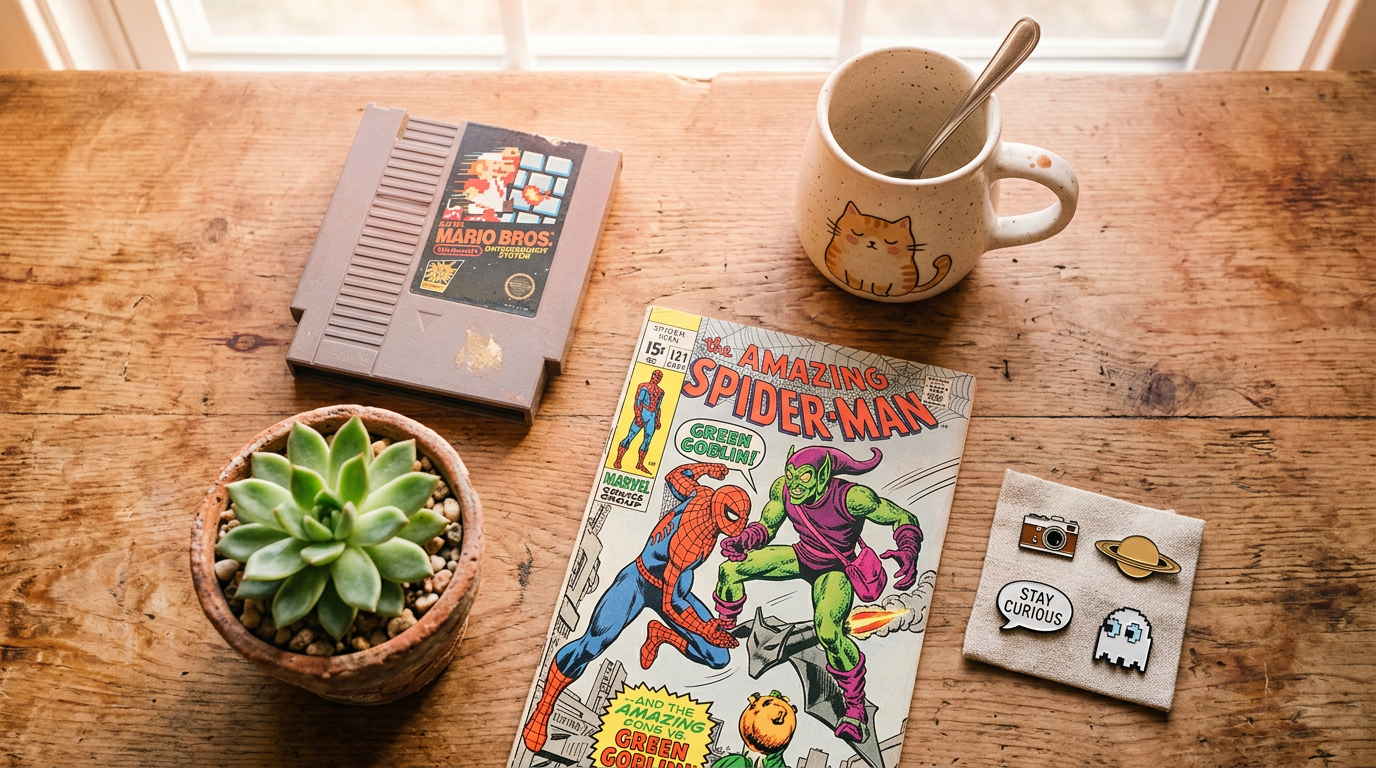
Don't know where to begin? We’ve got a whole guide on the best starter items for a trade up. Think old video games, unique coffee mugs, interesting pins, small pieces of art, or vintage band t-shirts. Find the treasure in the junk.
Step 2: Craft the Narrative
Once you have your item, you become its publicist. Clean it up. Take high-quality, well-lit photos from every angle. Then, write a killer description. Don’t just say “Used book.” Say, “Vintage 1985 sci-fi paperback with incredible cover art. The start of my journey to trade up to a house. Who wants to be the first chapter in this story?”
People aren't just trading for your item. They're trading to be part of your journey.
Step 3: Find Your Trading Partner
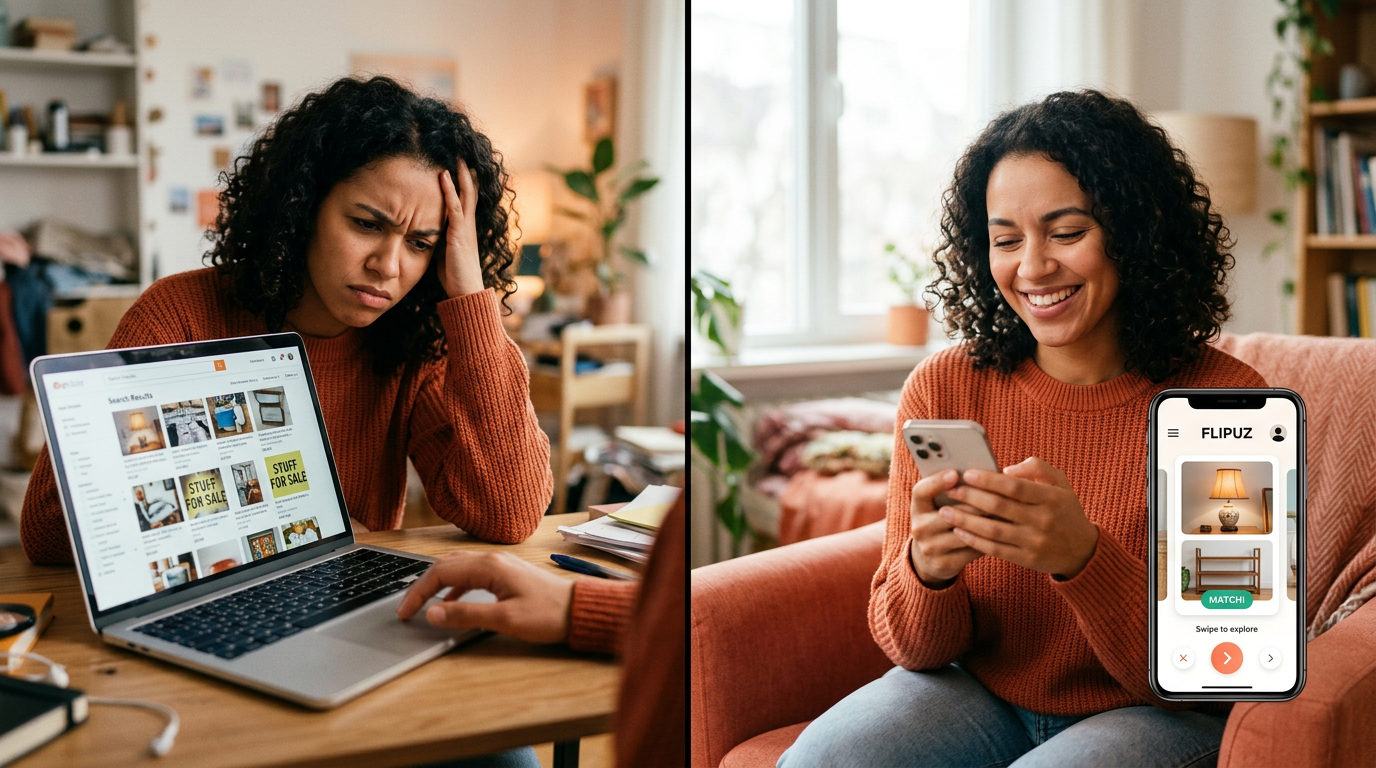
You can try the old ways. Post on Facebook Marketplace, get lost in Craigslist DMs, and deal with a million “Is this still available?” messages. It’s slow, messy, and full of friction.
Or, you can go where the traders are. You can use an app built specifically for this game. You can use Flipuz.
The Art of the Flip: Strategies for a Successful Trade Up
Getting from a $10 action figure to a $10,000 car isn't about luck. It's about strategy. To win the small item trade up challenge, you need to think like a professional.
Perceived Value is Everything
Forget what an item is “worth” on eBay. The only thing that matters is what it’s worth to the person you’re trading with. Your goal is to find someone whose perceived value of your item is high, and whose perceived value of their own item is low. The classic example: The musician who has three guitars and never plays their acoustic one. To them, that guitar is just taking up space. To you, it’s a massive leap forward. You need to find that person.
Specialize and Dominate
Don't try to be an expert in everything. Maybe you know a lot about sneakers. Or vintage cameras. Or Funko Pops. Lean into that. By focusing on a niche, you'll be able to spot undervalued items that others miss. You'll know a rare find when you see it. Your knowledge becomes your competitive advantage.
Patience is a Virtue (and a Weapon)
Not every trade will double your value. Sometimes, you’ll trade laterally for an item that’s simply more desirable or easier to trade. Sometimes, you'll hold onto an item for weeks waiting for the right offer. The impatient trader makes bad deals. The patient trader waits for the perfect opportunity to strike. The $10 to a house trade up is a marathon, not a sprint. Don't settle.
Always Think Two Trades Ahead
Before you accept a trade, ask yourself: “What can I get for this new item?” Is it more desirable than what you have now? Does it open up a new, more valuable market of traders? If you have a rare comic book, and someone offers you an equally valuable but obscure piece of pottery, think twice. The comic book probably has a larger pool of potential traders. The best traders aren't just thinking about the current deal; they're strategizing their next three moves.
From a Ten-Spot to a Tesla: The Blueprint is Real
This isn't a fantasy. The blueprint exists. Kyle MacDonald proved it. He made 14 trades. A red paperclip for a fish-shaped pen. The pen for a doorknob. The doorknob for a camping stove. On and on it went, through a generator, a snowmobile, a recording contract, until a town—yes, a literal town—offered him a two-story farmhouse for a role in a movie he had acquired in a trade.
Your path will be different. Maybe your goal isn't a house. Maybe it's a specific car. Or a down payment on one. Maybe it's a dream vacation. The specific goal doesn't matter. The process is the same. Start small. Trade smart. Stay focused.
Stop Messing Around. Start Your Challenge on the Right App.
Look, you can try to run your $10 trade up challenge on a patchwork of platforms not built for it. You can drown in spam, deal with flakes, and try to explain the concept of a trade-up to people who just want to lowball you for cash.
Or you can join a community that gets it.
Flipuz is the arena built for this exact challenge. It's a trade-up game come to life. Here’s why it’s the only tool you need:
- Swipe. Match. Trade. Our interface is intuitive. It’s built for discovery. You’re not scrolling through endless feeds; you’re being matched with people who want what you have and have what you want.
- No Fees. Ever. We don't take a cut. Your value is your own. Every ounce of hustle you put in pays off for you, not for us.
- A Community of Traders. Everyone on Flipuz is there to trade. You don't have to explain the rules of the game. We're all playing it together.
- Track Your Journey. Your profile becomes the living document of your trade-up story. Show off your past trades and build momentum for your next one.
The $10 trade up challenge is a test of your vision, your hustle, and your ability to connect with people. It’s about creating extraordinary value out of thin air.
So, what are you waiting for? That ten-dollar bill in your wallet isn't going to trade itself.
Ready to begin your journey? Download Flipuz and start your $10 trade up challenge now!
FAQ
What's the best item to start a $10 trade up with?
A great starter item has a blend of uniqueness, niche appeal, and is easy to handle. Think vintage paperbacks with cool covers, quirky coffee mugs, old video games, enamel pins, or small, interesting pieces of home decor. The key is to find something for under $10 that looks more valuable than it costs and has a story.
How long does a trade up challenge take?
It varies wildly and depends entirely on your goal, your strategy, and your dedication. A trade up for a $100 item might take a few weeks. A trade up for a car could take a year or more. The famous red paperclip trade to a house took about a year and 14 trades. Patience is your most important asset.
Is the $10 trade up challenge legal and safe?
Yes, bartering is a perfectly legal form of commerce. To stay safe, always arrange trades in public, well-lit places. Use a dedicated platform like Flipuz that provides a secure environment for communication and helps you connect with a community of verified traders. Never give out unnecessary personal information.
Can you really trade up to a house from just $10?
Theoretically, yes. The red paperclip trade proved it was possible. It requires immense skill, patience, publicity, and a bit of luck. While a house is the ultimate grand prize, many people use the challenge to achieve more accessible dreams like a new laptop, a bike, a car, or a luxury watch. The principle remains the same regardless of the goal.
Stop reading. Start trading.
Pick a dream — house, car, Rolex, MacBook. Drop a starter item. Swipe. Flipuz handles the rest.