
 Trading Guides
Your Guide to the Trade Up Challenge: From Paperclip to Porsche
Heard of the guy who traded a red paperclip for a house? That's a trade up challenge, and you can do it too. This guide shows you how to start.

You’ve heard the legend. A single red paperclip. A series of trades. A house. It sounds like a folk tale, but it’s real. Kyle MacDonald did it, and his journey ignited a global phenomenon: the trade up challenge.
This isn't about getting lucky. It's a game of strategy, psychology, and persistence. It’s about understanding that value is subjective and turning that insight into tangible assets. You don't need a trust fund or a winning lottery ticket to chase your dreams. You just need a starting item and the guts to ask, "What will you trade me for this?"
Forget the slow grind. The trade up challenge is your fast-track from everyday items to extraordinary goals. Whether you’re eyeing a new car or just want to prove you can do it, this is your blueprint. Let’s break down how you can start your own item trading challenge today.
What Exactly Is a Trade Up Challenge?
At its core, a trade up challenge is a sequence of barter trades. You start with an item of little to no monetary value and trade it for something slightly more valuable. You repeat this process, “flipping” your way up the value ladder, until you reach a predetermined goal. Your goal could be a dream item like a Rolex, a down payment for a house, or even a specific dollar amount to donate to charity.
The entire concept hinges on a simple economic principle: the subjective theory of value. The dusty snowboard in your garage is worthless to you, but to someone who’s been dying to hit the slopes, it has immense value. They might have a high-end espresso machine they never use that you’ve always wanted. That’s a win-win. You’re not trying to trick anyone; you’re finding the person for whom your item is the perfect solution.
The most famous example, the one red paperclip challenge, saw Kyle MacDonald make 14 trades over a year. He went from a paperclip to a fish-shaped pen, to a doorknob, to a camping stove, and eventually, through a series of increasingly valuable trades, secured a role in a movie, which he then traded for a two-story farmhouse in Kipling, Saskatchewan.
His journey proves the model works. It’s a testament to creativity and human connection. Before apps, this meant posting on Craigslist, knocking on doors, and a whole lot of legwork. Today, you have a powerful tool designed specifically for this purpose in your pocket. The a-ha moment is realizing you don't have to do it the hard way.

The Psychology Behind Successful Trading
Winning a trade up challenge is less about inventory and more about insight. You need to get inside the heads of potential traders and understand what drives them. Master this, and you’re unstoppable. We even wrote a whole post on the psychology of trading up.
Perceived Value is Everything
Stop thinking about what an item cost or its eBay price. Start thinking about its potential value to a specific person. That half-used bottle of expensive perfume? Worthless to you, but a perfect 'try before you buy' for someone else. That old textbook? A lifesaver for a student on a budget. Your job is to find that person. Frame your item's story around the problem it solves or the joy it brings. Sell the benefit, not the object.
The Art of the Ask
Confidence is your currency. You’re not asking for a handout; you’re proposing a mutually beneficial exchange. When you initiate a trade, be clear, confident, and direct. Explain what you have, what you're looking for (or that you're open to offers), and why it’s a good deal for them. The worst they can say is no. Every 'no' gets you closer to a 'yes'. Rejection is just data telling you to approach a different trader.
Patience and Persistence Win
The trading journey isn’t a straight line up. You will hit plateaus. You will get offers that are a step backward. You might hold an item for weeks with no interest. This is the grind. This is where most people quit. Don't be most people. The key is to stay active, keep swiping, keep proposing trades, and have faith in the process. Your perfect trade partner is out there; you just haven't matched with them yet.
Storytelling Creates Value
Never forget that you are on an adventure. Document it. Your item isn’t just a used guitar; it’s “Trade #7 in my quest to trade up to a car.” People aren’t just trading for an item; they’re buying into your story. They want to be a part of your journey. Sharing your progress on social media, a blog, or right within your Flipuz profile creates a narrative. That narrative adds intangible value that can push a potential trader to say yes.
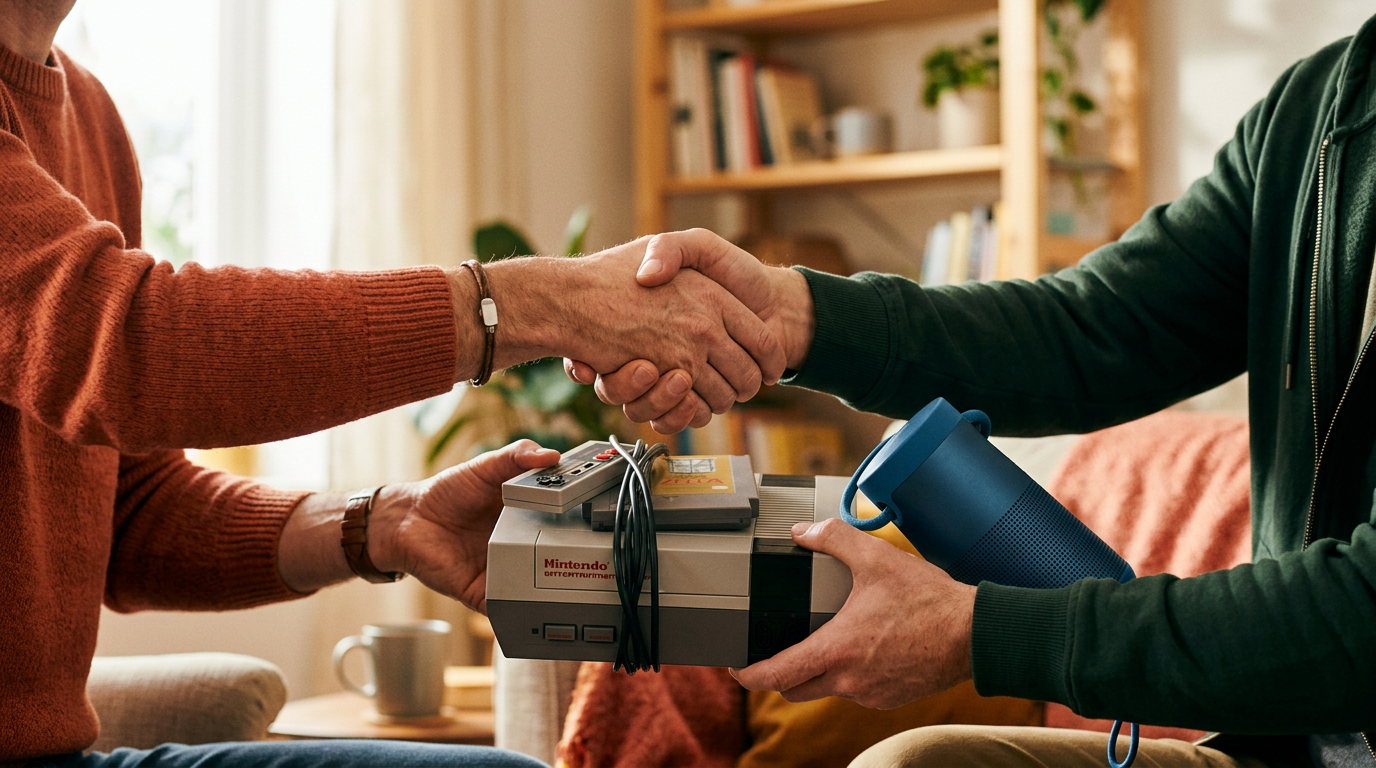
Your Step-by-Step Guide to Starting a Trade Up Challenge
Theory is great, but action is better. Follow these steps to launch your own barter challenge and start trading your way to the top.
Step 1: Define Your Ultimate Goal
What are you doing this for? “Something cool” is not a goal. You need a North Star. Is it a specific item? A financial target? A life-changing experience? Head over to our Dreams landing page for inspiration. Whether it's a a down payment for a house or a classic motorcycle, having a concrete goal will fuel your motivation when the trading gets tough. Write it down. Visualize it. This is your 'why'.
Step 2: Choose Your Starter Item
The first item in your item trading challenge is crucial for building momentum. It doesn’t have to be valuable, but it should be interesting. Think small, portable, and unique. A red paperclip is iconic, but you could also start with a cool rock, a foreign coin, a novelty pen, or a vintage postcard. We’ve got a whole guide on the best starter items for a trade up to get your ideas flowing. Find something in your house right now that you wouldn’t miss.
Step 3: Get on the Right Platform
This is the most critical decision you'll make. You could use old-school methods like Facebook Marketplace or Craigslist, but they are clunky, full of flakes, and not built for bartering. They’re marketplaces for cash, not for trading.
Flipuz is built for this. It’s a dedicated trading ecosystem. The swipe-to-match interface is fast, fun, and efficient. It connects you directly with other people who are there to trade, not to shop. You’re not a weirdo for wanting to barter; you’re a member of the club. It eliminates the noise and connects you with serious traders.
Step 4: Craft Your Listing
Your listing is your sales pitch. Take clean, well-lit photos of your item from multiple angles. Write a punchy, engaging description. And most importantly, tell your story. State your starting item and your ultimate goal. Create a public profile for your challenge. Use a title like "Red Paperclip Challenge: Help me trade this for a car!" This transforms a simple item into a ticket to an adventure that other people will want to be a part of.
Step 5: Make Your First Trade (and the Next)
Don't get paralyzed by analysis. Your first goal is to make any upward trade. Get a win on the board. The psychological boost of that first successful trade is immense. As you acquire more valuable items, you can be more selective. Review your matches, send out offers, and stay engaged. Set a goal to check the app and send ten trade offers a day.
Step 6: Document and Share Your Journey
Turn your challenge into public content. Create a TikTok or Instagram account dedicated to your journey. Post updates for every trade. Show the old item, the new item, and thank the person you traded with. This builds social proof, creates a following, and attracts higher-value offers from people who want to be part of your story. Tag @FlipuzApp—we love to feature our users' success stories.
Common Pitfalls and How to Avoid Them
Every hero's journey has its obstacles. Here are the common traps that derail aspiring traders and how you can sidestep them.
-
Getting Greedy Too Soon: Don't try to trade your snow globe for a laptop. The game is won through small, consistent, incremental gains in value. Aim for a 1.5x or 2x value increase with each trade. Hitting a series of singles and doubles will win you the game, not swinging for a home run every time.
-
Losing Momentum: The middle of the challenge can feel like a slog. You've traded your way up from a pen to a decent set of headphones, but your dream car still feels a million miles away. This is normal. Combat it by celebrating small wins, reviewing your progress, and reminding yourself of your ultimate goal. Keep swiping. Keep engaging.
-
Holding Out for a 'Perfect' Offer: Perfection is the enemy of progress. You might get a solid offer that’s a clear step up, but you hold out, thinking something better is around the corner. Sometimes it is, but often it isn’t. A good trade today is better than a perfect trade that never materializes. If an offer moves you closer to your goal, take it.
-
Ignoring Safety: When you're trading physical goods, you're often meeting strangers. Your safety is paramount. Always meet in a public, well-lit place like a coffee shop or a police station lobby. Tell a friend where you’re going. On Flipuz, we prioritize community and have strict guidelines, but you should always follow best practices for safety when meeting up.
Ready to Start Your Own Item Trading Challenge?
You have the knowledge. You have the strategy. The only thing missing is action.
The trade up challenge isn't just a story you read about online. It’s a real, achievable goal that people on Flipuz are working toward every single day. The person who eventually trades for a house starts with the same first step as you: deciding to begin.
Stop wondering 'what if' and start finding out what's possible. That clutter in your closet isn't junk; it’s a collection of keys waiting to unlock your next adventure. Your journey from where you are to where you want to be starts with a single tap, a single swipe, a single trade.
What are you waiting for? Download Flipuz and start your trade up challenge now!
FAQ
What's the best first item for a trade up challenge?
Your best bet is something small, unique, and easy to carry with a story. Novelty items, interesting office supplies (like a red paperclip), a foreign coin, a cool-looking rock, or a small piece of vintage decor work well. The goal isn't monetary value but conversation value to get your first trade.
How long does a trade up challenge take?
This varies wildly depending on your goal, your strategy, and your luck. Kyle MacDonald's famous trade from a paperclip to a house took one year and 14 trades. A smaller challenge for an item like a new bike could take a few weeks or a couple of months. Persistence is more important than speed.
Is trading items for profit legal?
Bartering is perfectly legal. However, if you acquire an asset and its value has increased by the time you trade or dispose of it, the IRS may consider that a taxable event. For most small-scale, personal trade up challenges, this is rarely an issue, but if you trade your way to a high-value asset like a car or house, it's wise to consult with a tax professional.
How does Flipuz make the trade up challenge easier?
Flipuz is designed for bartering. Unlike cash-focused marketplaces, our entire community wants to trade. The swipe-to-match system quickly connects you with people who are interested in your item, saving you from endless scrolling and lowball cash offers. It's a dedicated arena for the trade up challenge, connecting you with willing partners instantly.
Stop reading. Start trading.
Pick a dream — house, car, Rolex, MacBook. Drop a starter item. Swipe. Flipuz handles the rest.