
 Bartering
Bartering 101: A Beginner's Guide to Trading Without Money in 2026
No money, no fees, no checkout — just two people swapping things they value. Here's how modern bartering actually works in 2026, and why it's quietly outpacing classifieds.
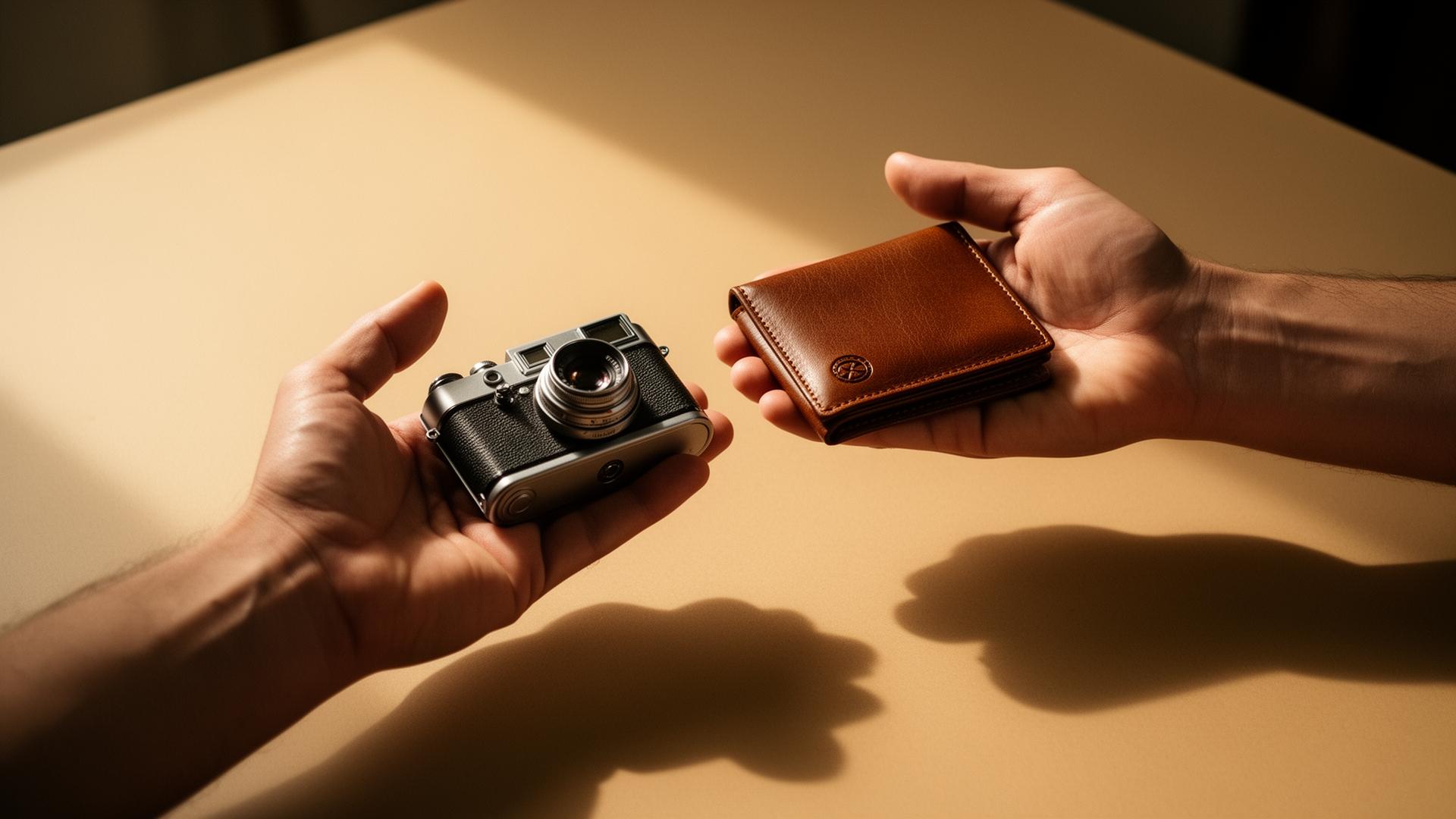
Bartering — swapping one thing of value directly for another, with no money in the middle — is the oldest form of commerce on Earth. It predates coins, credit cards, Stripe, and Venmo by roughly six thousand years. It also happens to be the most satisfying way to "shop" that's ever been invented, which is exactly why apps like Flipuz are quietly pulling people out of marketplaces and back into trading.
If you've ever heard the story of the guy who traded a paperclip for a house, you've already seen what bartering at scale can do. Kyle MacDonald turned a single red paperclip into a two-story house in fourteen swaps. He didn't sell anything. He didn't list anything for a price. He bartered. This guide is the on-ramp to doing the same thing in 2026 — without the year-long blog grind he had to invent from scratch.
What bartering actually means in 2026
Modern bartering is any direct swap of goods or services between two parties without money changing hands. That's the whole definition. The thing being traded can be physical, digital, or labor — what makes it bartering is that no currency is involved. You're trading value for value, eyeball-to-eyeball.
It typically takes one of three shapes:
- Item-for-item swaps. Your old DSLR for someone's mountain bike. A pair of unworn Jordans for a vintage Strat. The cleanest, most common form of bartering and the one that powers most of Flipuz.
- Services for goods. Graphic design for a coffee maker. A weekend of yardwork for a paddleboard. Common in tight local communities and freelancer circles.
- Trade-up chains. Repeated swaps that climb in value over time — the red paperclip trade is the most famous example. Each individual swap is just a barter; the chain is the magic.
Why bartering is exploding right now
There are three forces converging on this exact moment:
- Marketplace fatigue. Listing fees, payout holds, ghost buyers, "is this still available?" messages, scam offers, shipping disputes, broken returns. Selling on a marketplace in 2026 is a part-time job. Bartering skips every one of those steps.
- Sustainability. A swap is the lowest-carbon transaction possible. Nothing manufactured, nothing shipped from an overseas warehouse, nothing wrapped in plastic. Two items that already exist simply change owners. The Ellen MacArthur Foundation and almost every circular-economy report points to barter and second-hand exchange as the single biggest lever consumers have.
- The game layer. Apps like Flipuz turned bartering into a swipe deck and a leaderboard. It feels like a game now, not a chore. That tiny UX shift took an ancient behavior and made it addictive in the best possible way.
The modern way
Bartering, but it actually works.
Flipuz is a swipe-based barter app. No cash, no fees, no awkward DMs. Just match, meet, swap — and climb the leaderboard while you do it.
Try it freeThe 7 rules of good bartering
Bartering looks effortless when you watch a 60-second TikTok recap of someone flipping a bobby pin into a Tesla. It is not effortless. It obeys rules. These are the seven that separate people who land chains from people who stall at trade #2.
- Trade what's worthless to you for something useful to you. Not necessarily more expensive — more useful. A $10 board game collecting dust in your closet for a $10 desk lamp you actually need is a perfect trade. You both win, and you both walk away ready to do another one.
- Make the other person feel like they won. Greed kills repeat trades; generosity unlocks them. The single biggest differentiator between traders who climb to a Rolex and traders who stall is that the climbers consistently overdeliver on the small swaps so the big ones come to them.
- Document everything. Photos before, photos after. Photo of both items together at the meet-up. It's how trust scales, it's how disputes get resolved, and on Flipuz it's literally how the leaderboard verifies your chain.
- Meet in public. Always. Coffee shops, mall food courts, the swap zones most major police stations now offer. If the other party pushes for a meet at a private address, walk.
- Don't barter under pressure. "I need to do this today" is a flag waving in a windstorm. If a counterparty is rushing you, the trade is bad. The next swipe will produce a better one.
- Pick a dream item up front. "I'll just see what people offer" is how chains die at trade #3. Pick the destination — house, car, Rolex, MacBook — and every offer you see suddenly sorts itself into "moves me closer" or "doesn't."
- Trade weekly, not "someday." Trade-up chains die from neglect, not bad swaps. Five minutes of swiping a day keeps your inventory live, your matches warm, and your name visible at the top of the feed.
Bartering vs. selling: which is actually better?
For most "stuff I'd otherwise list," bartering wins on three axes: speed, fees, and emotional payoff.
Listing on a marketplace forces you through pricing research, photos, payouts, "will you ship?", returns, and platform fees that quietly eat 10–20%. The total time cost of a single $50 sale on a marketplace is usually 60–90 minutes spread across a week. The total time cost of a single $50 barter on Flipuz is one swipe, one match, and one twenty-minute coffee shop meet-up.
The downside of bartering used to be liquidity — finding the exact right counterparty was hard, which is why most people defaulted to cash. That's the problem trade-up apps solve. Flipuz puts an entire city's worth of swap-ready stuff in one swipe deck, so the counterparty for almost any item you own is two minutes away.
The economics: why bartering quietly beats cash
Cash transactions assume both sides agree on a price. That agreement is hard, which is why every "what's it worth?" thread on Reddit goes fifty replies deep. Bartering sidesteps the price problem entirely. Two people are simply asking each other one question: do you value my thing more than I value your thing? If yes, done. The math doesn't have to match a market price; it only has to match each person's individual sense of value.
That's the secret behind every famous trade-up chain. Kyle's snowmobile for a snowmobile-trip wasn't a "dollar match" — it was a swap where each person valued the other thing more. Same with the bobby pin chains, the AirPods chains, the every-day Flipuz chains that hit a MacBook in six trades. The asymmetry of perceived value is the engine.
How to start bartering tonight (in 4 steps)
- Walk to your junk drawer. Pick the thing you'd be embarrassed to sell on a marketplace because it's "not worth posting." Old AirPod case, dead Bluetooth speaker, the unopened cosmetic from a gift basket, a board game with one missing piece. That's exactly what someone two zip codes over is hunting for.
- Photograph it well. Natural light, plain background, three angles. Bartering is 90% trust signaling — bad photos kill it.
- Pick your dream. Write it down. House. Mustang. MacBook. Without a destination every offer looks equally good, which means none of them feel right and you stall at trade #2.
- Open Flipuz and swipe for five minutes. That's it. Your first match will probably happen tonight. Your first swap will happen this week. Your first "wait, this is actually working" moment will happen at trade #3.
Frequently asked questions
Is bartering legal?
Yes. Direct exchanges of personal property between individuals are legal in every U.S. state and almost every country. Larger or repeated barters can be taxable depending on your jurisdiction — when in doubt, talk to an accountant — but personal swaps almost never trip that wire.
Do I need to be in a big city to barter?
No. Flipuz works in towns of 5,000 people just as well as it works in NYC. Smaller markets actually surface higher-quality matches faster because the noise is lower.
What if my first trade is "bad"?
It probably will be. That's the whole point. The first trade isn't about value — it's about getting on the chain. Every chain on the leaderboard has at least one trade in it that the trader admits was a "questionable" swap. The chain is what matters, not the rung.
How long does it take to trade up to a house?
Kyle did it in 14 trades over 12 months. Demi Skipper, who repeated the experiment in 2020, did it in 28 trades. Modern Flipuz users who flip every week tend to hit a car in 6–9 months and a small property in 12–18. Your mileage will vary based on how often you trade and how big your dream is.
Continue your trade-up education
Hand-picked next reads from the Flipuz blog.
- One Red Paperclip Traded for a House: The Full Story (And How to Do It Yourself) — Kyle MacDonald posted a single red paperclip online in 2005. One year and 14 trades later, he owned a house. Here's every swap, what made it work, and how to run the same play today.
- How to Trade a Paperclip for a House in 2026 (Step-by-Step Playbook) — Kyle did it on a blog over a year. You have an app and a thumb. Here's the 2026 playbook for trading up from a paperclip to a house, broken down into seven repeatable steps.
- 10 Real Stories of People Who Traded Up — From Paperclips to Cars, Rolexes & Houses — The red paperclip trade isn't a one-off. We've lined up ten of the wildest documented trade-up chains in history — and a few from inside Flipuz this month.
- The Best Starter Items to Trade Up From (Yes, Even a Paperclip Works) — Your first trade is the most important one. We crunched real Flipuz data and the original red paperclip trade chain to figure out what makes a great opening move.
- Why Trading Beats Buying: The Psychology Behind the Trade-Up Game — The reason millions of people remember the guy who traded a paperclip for a house isn't the house. It's the chain. Here's the psychology of why trading up is wildly more satisfying than buying.
Stop reading. Start trading.
Pick a dream — house, car, Rolex, MacBook. Drop a starter item. Swipe. Flipuz handles the rest.