
 Trading Guides
$10 Trade Up Challenge: Your Guide to Flipping for Profit
Ever dream of trading a small item all the way up to a house? The $10 trade up challenge makes it possible. Here’s your complete guide to starting.

You have a dream. A big one. Maybe it’s a house, a classic car, or a ridiculously nice watch. The problem? The mountain of cash separating you from that dream. But what if you could get there without spending a dime?
Welcome to the $10 trade up challenge. It’s not a get-rich-quick scheme; it's a real-life adventure in value, negotiation, and hustle. This is the modern evolution of the journey that started it all: the legendary red paperclip trade, where one guy traded a simple office supply all the way to a two-story farmhouse.
Sounds impossible? It’s not. It’s a game of strategy, and with the right tools and mindset, you can play to win. This is your definitive guide to starting your own profitable trade up journey, turning a ten-dollar bill into treasure.
What Is the $10 Trade Up Challenge?
At its core, the $10 trade up challenge is a personal quest to start with a single item of low monetary value (around $10) and trade it for something slightly more valuable. You then trade that new item for something else of even greater value, repeating the process until you reach a predetermined goal.
The secret isn’t about tricking people. It’s about finding the right person for each item. Value is subjective. The old video game console collecting dust in your closet might be worthless to you, but it could be a treasured piece of nostalgia for someone else—someone willing to trade you something you find more valuable. You're a matchmaker of things, connecting unwanted items with their perfect new owners.
This isn't about cash. The purest form of the challenge involves no money changing hands. It’s a pure bartering system, forcing you to focus on the perceived value of your items and your own negotiation skills. You aren't selling; you're swapping. You're looking for a win-win where both parties walk away feeling like they got the better end of the deal. The rules are simple, but the execution is an art. It’s one part psychology, one part marketing, and all parts determination. Answering the question of what is the trade up challenge is easy; mastering it is the real prize.
Why You Should Start a Trading Up Challenge
You might think the only reward is the final item, but the real value is in the journey itself. Starting a trade up challenge is one of the most effective, low-risk personal development courses you can ever take.
First, you learn high-value skills. Every trade forces you to practice negotiation, sales, and marketing. You learn how to craft a compelling story around an item, how to identify what other people want, and how to create a deal where everyone wins. These are skills that translate directly into professional success, whether you're asking for a raise or pitching a business idea.
Second, the risk is practically zero. Your initial investment is ten bucks. That’s it. In a world of high-stakes side hustles, this is one you can start with the change in your car's cup holder. You have literally nothing to lose and a world of experience—and valuable items—to gain.
Third, it’s an incredible adventure. This isn't about mindlessly scrolling through another feed. It’s a real-life quest with levels, bosses (tough negotiations), and epic loot. It's a story you create, one trade at a time. This is a core reason why the challenge has become a media phenomenon, spawning countless articles and even a YouTube trade up challenge trend. People are captivated by the chase.
Finally, it builds confidence. Landing your first successful trade—turning a quirky mug into a vintage camera, for example—is a massive confidence booster. It proves you can create value out of thin air. Each subsequent trade reinforces that belief, transforming you into a more resourceful and resilient person.
Your First Move: Choosing the Perfect $10 Starter Item
Your first trade is the most important. It sets the tone for your entire journey. The item you choose can make the difference between a quick, exciting first flip and weeks of frustrating silence. So, how do you choose the right one?
Forget grabbing the first $10 thing you see. You need something with an “it” factor. Here are the keys to a great starter item, detailed further in our guide to the best starter items for a trade up.
Do's for Your Starter Item:
- Be Unique or Quirky: A generic phone case is boring. A phone case shaped like a retro cassette tape? Now you’ve got a conversation starter. Think vintage, handmade, or just plain weird.
- Have a Story: Can you talk about where it came from? Is it a limited edition? Was it owned by someone interesting? Stories add perceived value that money can't buy.
- Be Portable: Your first few trades might happen in person. Lugging a 50-pound dumbbell around is a non-starter. Keep it small and easy to transport.
- Be Visually Appealing: You'll be taking pictures and videos. An item that looks cool on camera is far more likely to grab attention online.
- Appeal to a Niche: Instead of trying to appeal to everyone, target a specific community. A rare comic book, a collectible pin, or a specialty kitchen gadget has a built-in audience of passionate people.
Don'ts for Your Starter Item:
- Don't Pick Generic Items: Avoid mass-produced junk from a big-box store. It has no story and low perceived value.
- Don't Choose Electronics (Usually): Unless it's a desirable retro item, old electronics depreciate fast and can have hidden issues. A five-year-old budget tablet is a dead end.
- Don't Pick Anything Perishable: This should be obvious, but no, you can't trade that fancy $10 croissant.
- Don't Start with Clothing: Sizing, style, and condition make clothing a difficult category for your first flip. Exceptions can be made for rare vintage band tees or unworn hype gear.
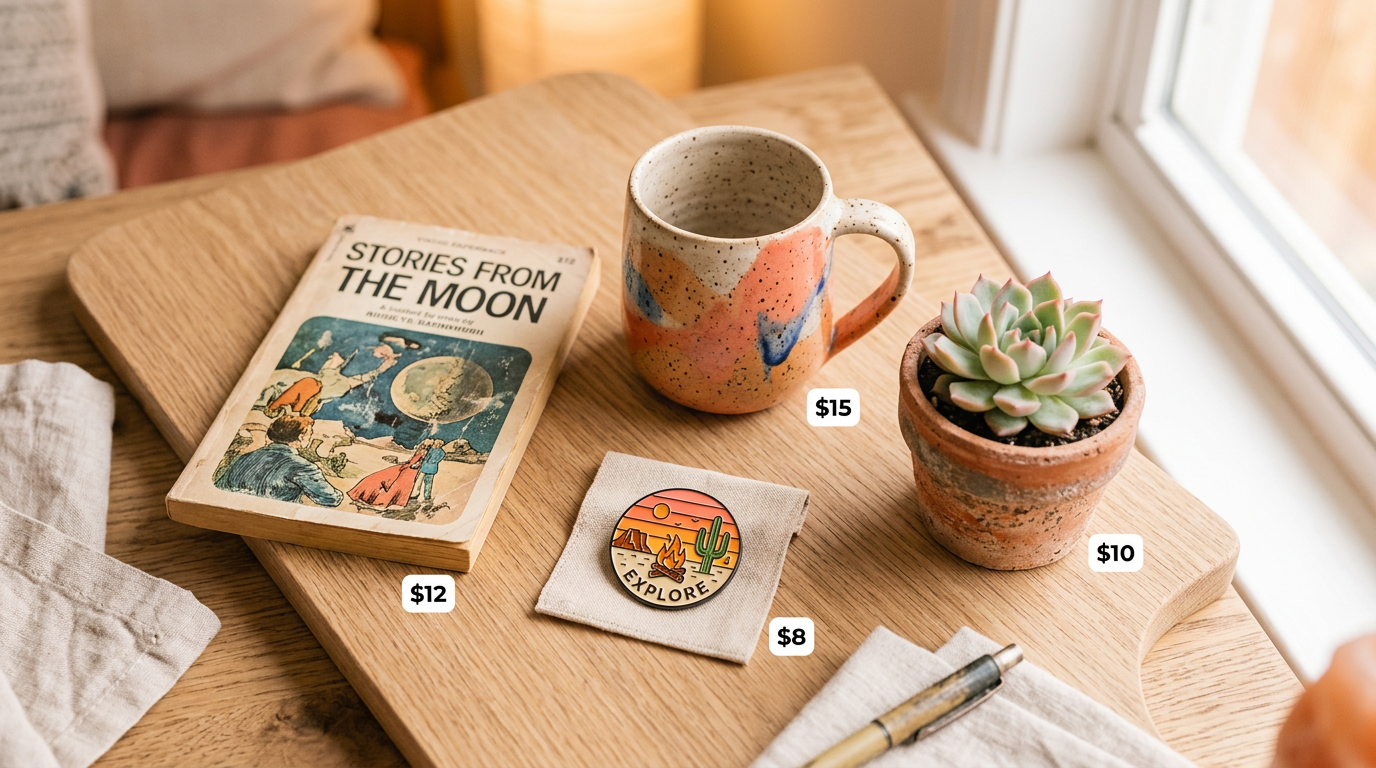
Consider items like a sealed deck of designer playing cards, a Moleskine notebook with a cool cover, a vintage paperback with stunning cover art, or a small, healthy houseplant in a unique pot. Your first item is your fishing lure. Make it irresistible.
The Art of the Flip: Strategy and Execution
Once you have your starter item, the hunt begins. Your mission is simple: find someone who wants what you have more than something they have. This is where strategy comes in. The old-school method involved knocking on doors and asking strangers, but we live in a digital world.
Your strategy should be twofold: offline and online. Offline, think local. Visit flea markets, record stores, and comic shops. Talk to people. Tell them your story. “Hi, I’m on a challenge to trade this cool thing up to a car. What do you have that you’re tired of looking at?” You'd be surprised how many people are willing to play along for the novelty alone.
But the real power move is to go digital. This is how you scale your reach from a single neighborhood to the entire country. Posting on cluttered marketplaces filled with lowballers and flakes can be a soul-crushing experience. They are designed for selling, not for the art of the trade.
This is why an online trading app built for this exact purpose is your secret weapon. On Flipuz, everyone is there for the same reason: to trade. There are no price tags, no selling fees, just a community of people looking to swap. It gamifies the entire process. You swipe on items you like, and when someone likes your item back, it’s a match. It’s a direct line to thousands of potential trade partners who already understand the game.
Crafting Your Pitch:
Whether online or off, your pitch is everything. Don't just show the item, sell the dream.
- Lead with the Story: “I’m on the $10 trade up challenge…” This immediately frames the interaction as something fun and unique, not a desperate plea.
- Highlight Your Item’s Value: Explain why it’s cool. Use the unique characteristics you identified earlier.
- Identify Their Need: Ask questions. “What kind of stuff are you into? Are you a collector?” Find out what they value.
- Propose the Win-Win: Frame the trade from their perspective. “You get this awesome piece for your collection, and I get one step closer to my goal. You’ll be part of my story.”
Patience is a core part of the strategy. You will get more “no”s than “yes”es. Every rejection is just data. Maybe you’re targeting the wrong audience, or maybe your story needs work. Analyze, adapt, and keep swiping.
Documenting Your Journey: Building Your Legend
Remember Kyle MacDonald's red paperclip? You remember it because he was a masterful storyteller. He didn't just trade; he documented every single step on his blog. This is not an optional part of the challenge—it is essential.
Documenting your journey accomplishes two critical things:
- It Builds an Audience: People are addicted to progress. They love a good underdog story. By posting your trades on TikTok, Instagram, YouTube, or a blog, you bring people along for the ride. They will root for you, share your story, and become your biggest cheerleaders.
- It Dramatically Increases the Value of Your Items: As your audience grows, your items gain “story value.” You’re no longer trading just a used guitar; you’re trading the famous guitar from “The $10 Trade Up Challenge,” the same one seen by 50,000 people on TikTok. Future trade partners won't just want the item; they'll want to be the next chapter in your viral story. This social capital is often more valuable than the item itself.
Your content doesn't need to be Hollywood-produced. Just be authentic. Use your phone. Take a clear photo or a short video for each trade:
- The Acquisition: Show your new item. Talk about who you traded with and what you gave them.
- The Pitch: Create content showcasing your current item and what you're looking for next.
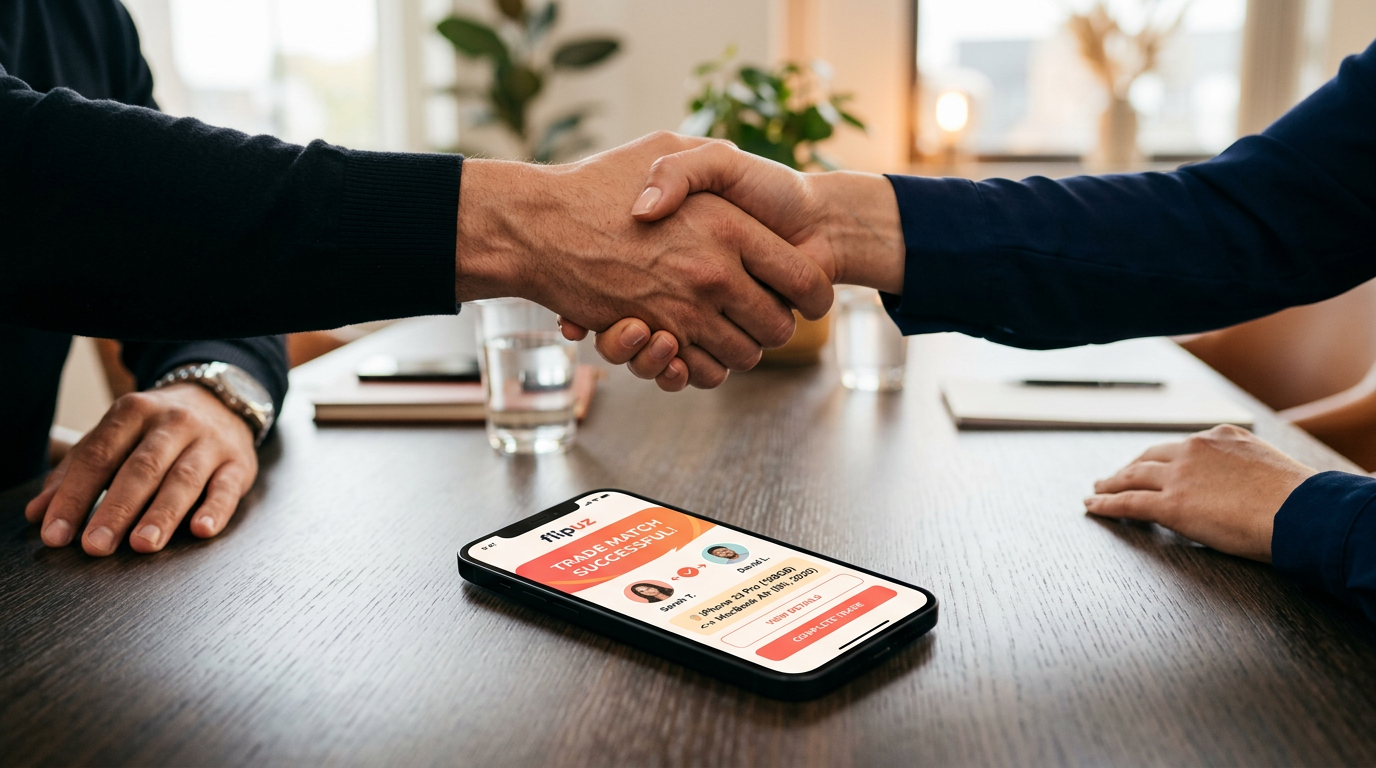
- The Moment of the Trade: Film the handshake. Capture the excitement.
By building a public record, you’re creating a legend. You're not just some random person with a fish tank; you're the person who famously traded a lava lamp for that fish tank. This narrative is your most powerful trading tool.
The Flipuz Advantage: Your Unfair Edge
You can absolutely attempt the $10 trade up challenge the old-fashioned way. But why would you start a cross-country race on a bicycle when a sports car is waiting for you, keys in the ignition? Flipuz is your sports car.
Flipuz was built for this. It is the spiritual successor to the red paperclip, digitized and supercharged for the 21st century. Instead of knocking on a hundred doors, you can make a thousand potential connections before you finish breakfast.
Here’s your unfair advantage:
- A Dedicated Community: Every user on Flipuz is there to trade. You don't have to explain the concept of bartering. They get it.
- Frictionless Discovery: Our swipe-to-match system is fast, fun, and addictive. It’s the quickest way to find people who want what you have.
- No Cash, No Fees, No Fluff: Flipuz is a pure trading ecosystem. This keeps your challenge authentic and your focus sharp.
- Dream Goals: Set your ultimate goal right in the app, whether it's a dream car or something else. This signals your intent to the entire community and attracts people who want to help you get there.
- Built-in Storytelling: Your profile tracks your trade history, automatically building your legend for everyone to see. Each successful trade adds to your reputation.
Stop wondering if you can do it. The path from a simple ten-dollar item to your ultimate dream is real, and it’s more accessible now than ever before. It’s time to stop dreaming and start trading.
Ready to begin your own epic journey? Download Flipuz and make your first trade today.
FAQ
What's the best item to start a $10 trade up challenge with?
The best starter item is unique, portable, and has a great story. Avoid generic, mass-produced items. Think vintage, quirky, or niche, like a rare book, a collectible pin, or a handmade object. Something that sparks a conversation gives you a massive head start.
How long does a trade up challenge take?
There's no set timeline. Kyle MacDonald's famous red paperclip trade took one year and fourteen trades. Others have achieved amazing results in a few months. The duration depends on your strategy, your persistence, the items you trade, and a bit of luck. Focus on making smart trades, not fast ones.
Is the trade up challenge realistic?
Yes, it is absolutely realistic, but it requires dedication. It’s not magic; it’s a numbers game fueled by strategy and good storytelling. Countless trade-up success stories prove that with the right approach and a modern tool like Flipuz, you can turn a small start into a life-changing result.
Can I really do this all on an app?
Absolutely. An app like Flipuz is the most efficient way to conduct a modern trade up challenge. It solves the biggest hurdle—finding willing trade partners—by connecting you to a massive community of traders instantly. It streamlines the discovery, negotiation, and documentation process all in one place.
What if I get stuck with an item I can't trade?
Getting stuck is part of the game. It’s a sign that you need to change your strategy. Re-evaluate who you're pitching to, try telling a different story about the item, or take better photos. Sometimes, you may even need to make a sideways trade for an item of similar value just to get something new with a different appeal. Patience and creativity are your keys to getting unstuck.
Stop reading. Start trading.
Pick a dream — house, car, Rolex, MacBook. Drop a starter item. Swipe. Flipuz handles the rest.