
 Trading Guides
The $10 Trade Up Challenge: From Ten Bucks to Your Dream
You've seen the viral videos. Now it's your turn. Here’s your step-by-step guide to mastering the $10 trade up challenge and flipping small items into big dreams.

You think big dreams require big money. A house, a car, that Rolex you’ve been eyeing. You think they’re out of reach without a winning lottery ticket or a trust fund.
You’re wrong.
What if you could get there without spending a dime past your initial investment? What if that investment was just ten dollars? Welcome to the $10 trade up challenge. It's not a fantasy. It's a strategy. It’s the modern version of the legendary red paperclip trade, supercharged for the digital age. You start with something small, something you can buy with the cash in your wallet, and you trade it for something better. Then you do it again. And again. And again, until that $10 object has morphed into something you once thought was impossible.
This isn't about luck. It's about vision, hustle, and the right tools. Ready to turn ten bucks into a testament to your own ambition? Let's get started.
What Exactly is the $10 Trade Up Challenge?
Strip away the hype, and the concept is beautifully simple. The $10 trade up challenge is a personal project where you start with a single item valued at approximately ten dollars. Your mission: to trade that item for another item of slightly higher value. You then take that new item and repeat the process, sequencing trades to progressively increase the value of your asset.
The ultimate goal is yours to define. For some, it's a specific high-ticket item—trading from $10 to a car is a classic. For others, it's a house, just like Kyle MacDonald famously achieved. And for many, the goal is simply the journey itself—to see how far they can push their negotiation skills and ingenuity. It’s a real-life video game quest.
This isn't just a quiet hobby anymore. The barter challenge has exploded on platforms like TikTok and YouTube, with creators documenting every swap. They're proving, in real-time, that value can be created out of thin air if you know how to play the game. They understand that the “value” of an item isn't a fixed number. It’s a combination of market price, perceived worth, convenience, and the story you tell. You’re not just trading an object; you’re trading a solution to someone else’s problem or a fulfillment of their desire.
Think about it. That old video game someone wants might be worth more to them than the slightly newer but less-loved bike sitting in their garage. Your job is to find that person and make the swap. That's the core of the challenge. Every trade is a puzzle, and with every solution, you level up.
The Mindset: Thinking Like a Master Trader
Before you even think about your first item, you need the right mindset. Most people fail because they think too literally. They just look at dollar signs. Master traders see beyond the price tag.
First, patience is your greatest asset. You will not trade a coffee mug for an iPhone in one step. The challenge is a marathon, not a sprint. You'll face lowball offers, dead-end conversations, and periods where your item just isn't moving. This is the filter that weeds out the tourists. The winners are the ones who persist. They understand that a series of small, smart wins adds up to a massive victory over time.
Second, you must become a storyteller. An item is just an item. But an item with a story? That's an opportunity. When you're pitching a trade, you’re not just listing specs. You're selling the experience. That isn't 'just a guitar'; it's 'the guitar I learned my first three chords on, perfect for any beginner.' Document your journey. Take good photos. A simple Instagram page or TikTok series dedicated to your $10 trade up challenge adds legitimacy and narrative weight. People are more willing to trade with someone on a mission. Your quest becomes part of the item's value.
Third, understand Perceived Value over Market Value. Someone might have a $200 tablet they never use. To them, it's just gathering dust—its practical value is zero. Your $150 vintage speakers, however, might be exactly what they need to complete their retro man-cave. To them, the perceived value of your speakers is higher than their tablet. This is the arbitrage you're looking for. The secret is understanding what other people want. For a deep dive into this, explore the psychology of trading up. It's less about economics and more about human nature.
Your First Move: Finding That Perfect $10 Starter Item
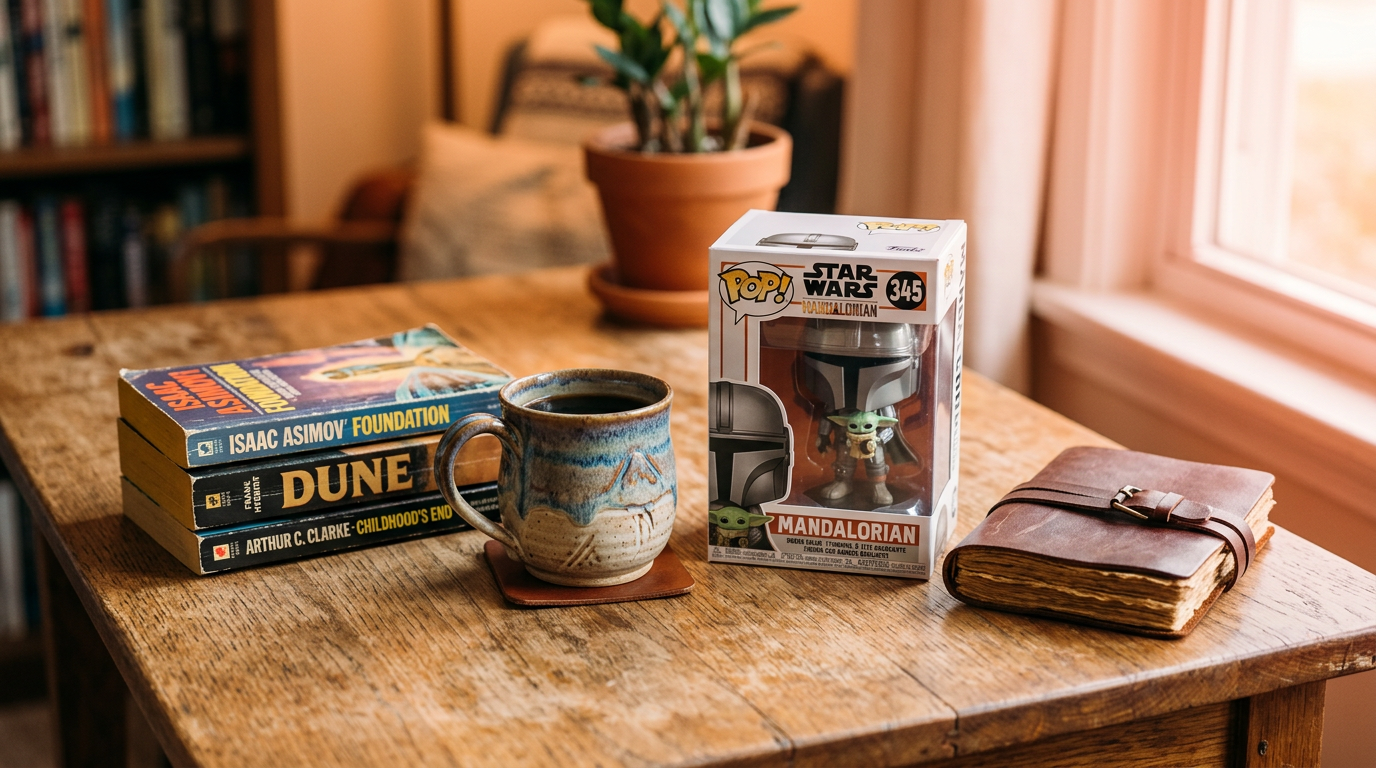
The entire challenge hinges on your first move. Your $10 starter item needs to be chosen with care. You’re not looking for something you like; you’re looking for something someone else will trade for. The ideal starter item has one or more of these qualities: high recognition, niche demand, or broad utility.
Forget generic junk. You need an angle. Here are some ideas to get you started:
- Nostalgic & Collectible: Think Funko Pops of popular characters, mint-condition 90s action figures, or first-edition paperback books from a beloved author. These items have dedicated fan bases actively looking for them.
- Unique & Aesthetic: A quirky, oversized ceramic mug, a small, interesting piece of art from a thrift store, a vintage band t-shirt, or a cool-looking desk accessory. These appeal to people’s sense of style.
- Useful & Brand-Recognized: A high-quality, brand-name phone case for a popular model, a set of barely-used artist pencils, a durable CamelBak water bottle, or a popular board game missing no pieces. These items solve an immediate need.
Where do you find these gems? Scour thrift stores, garage sales, flea markets, and the clearance sections of major retailers. Your $10 is the key to unlocking an item with a higher potential energy. For more inspiration, check out our complete guide to the best starter items for a trade up.
Remember, your first item’s job is just to get you to the second item. Don’t overthink it, but don’t be lazy. Find something with a spark of potential, and you’re on your way.
Executing the Trade: Strategy and Platforms
So you’ve got your starter item. Now, where do you find your trading partner? You have two main paths: the old way and the smart way.
The old way involves wading into the messy waters of Craigslist and Facebook Marketplace. You post your item, specify you’re looking for trades, and then brace yourself for an avalanche of “is this available?” messages, lowball cash offers, and proposte trades for broken lawnmowers. You'll spend hours sifting through junk to find one or two serious offers. It’s a grind. It works, but it's inefficient and can feel unsafe.
The smart way is to use a platform built for this exact purpose. This is where Flipuz comes in. We designed our app to be the engine for your trade up journey. Forget endless, fruitless messaging. Our system is built on a simple, powerful premise: swipe, match, trade.
You list your item. You set your goal—your dream item. Then you swipe through items other users have listed. When you find something you want, you swipe right. If they also swipe right on your item, it’s a match. Only then can you start a conversation. This single feature cuts out 99% of the noise.
Flipuz transforms the trade up challenge from a chore into a game. It's a true gamified marketplace designed for people who see the potential in what they have. No listing fees. No commissions. Just pure trading. It streamlines the entire process of how to trade up from something small, connecting you directly with other people who think like you.
Ready to skip the hassle and get straight to the good part? Your $10 trade up challenge starts here. Sign up for Flipuz and list your first item in minutes.

Navigating the Mid-Game: From $100 to $1,000+
After a few successful trades, you’ll enter the mid-game. Your items now have significant value—we’re talking electronics, electric bikes, designer furniture, high-end collectibles. The stakes are higher, and your strategy needs to evolve.
At this stage, documentation is non-negotiable. Your trade-up story is now a significant part of your asset's value. People will be trading with you not just for the item, but for the chance to be part of your documented journey. Keep your social media updated. Post clear pictures and be transparent about your goals.
Logistics also become more complex. You’re no longer trading a book for a video game. You're trading a laptop for a scooter. This means you need to be smart about safety. Always meet in a safe, public place. For high-value electronics, meet at a store where the item can be tested (e.g., a phone carrier's store to check an IMEI). Always inspect items thoroughly before you agree to the final swap. Trust your gut. If a deal feels too good to be true or the other person is being shady, walk away. There will always be another trade.
This is also the stage where you might start bundling items. Perhaps you trade a TV for a gaming console and three games. You can then trade the console separately for a better item, and the games for another smaller item, effectively branching your trade tree to accelerate your progress.
The Endgame: Closing in on Your Dream
The endgame is where the magic happens. You’ve traded your way up to items worth thousands of dollars. Maybe you have a dirt bike, a valuable watch, or even a small fishing boat. Now you’re aiming for the top. This is when you can set your sights on a car, a down payment for a house, or another one of your epic Dreams.
When dealing with titled assets like cars, boats, or property, the process demands due diligence. You are no longer just swapping goods; you are transferring ownership legally. This involves bills of sale, signing over titles at a notary or DMV, and understanding any tax implications. Do your research. Consult a professional if you feel out of your depth. A single mistake here can unravel all your hard work.
Kyle MacDonald's trade for a house involved lawyers and contracts. Don't be intimidated by this; be prepared for it. It's the final boss level of the trade-up challenge. The principles remain the same—finding a person who wants what you have more than what they have—but the execution requires precision.
The $10 trade up challenge is more than just a way to get free stuff. It’s a masterclass in negotiation, marketing, patience, and human psychology. It proves that a big outcome doesn't require a big starting point. It just requires you to start.
FAQ
Is the $10 trade up challenge legal?
Yes, absolutely. The act of trading one item for another is called bartering, and it's perfectly legal. For high-value items that have a legal title, like a car or a piece of land, you just need to ensure you follow the proper procedures for title transfer and pay any applicable sales or property taxes, just as you would in a cash transaction.
What's a good first item for a trade up challenge?
A good starter item is something with a low cost (around $10) but high perceived value. Think of items that are collectible, have brand recognition, or a unique aesthetic. A popular Funko Pop, a vintage paperback book, a quirky coffee mug, or a high-quality phone accessory are all great choices mentioned in our guide to the best starter items.
How long does a trade up challenge take?
There's no set timeline. Some people might get to a mid-value item in a few weeks, while a major goal like a car or house could take months or even years. The famous red paperclip trade to a house took Kyle MacDonald one year. Patience and persistence are more important than speed.
Where can I do a trade up challenge?
You can use traditional sites like Facebook Marketplace or Craigslist, but they are filled with noise and scams. A dedicated item trading app like Flipuz is the best option, as it's specifically designed for swapping items. The swipe-to-match feature connects you only with people who are already interested in what you have, saving you time and hassle.
Stop reading. Start trading.
Pick a dream — house, car, Rolex, MacBook. Drop a starter item. Swipe. Flipuz handles the rest.