
 How-To
How to Start a Trade Up Challenge: The Ultimate Guide
Want to learn how to trade a paperclip for a house? This is your ultimate step-by-step guide to starting your own epic trade up challenge.

You’ve heard the stories. Someone starts with a single red paperclip and, through a series of clever trades, ends up with a house. A legend, right? Wrong. It’s a true story, and it’s a blueprint. That’s the power of the trade up challenge, and you’re about to learn exactly how to do it yourself.
Forget needing a pile of cash to get what you want. Forget the grind. The trade up challenge is about value, vision, and a little bit of hustle. It’s a real-life game where the prize could be a new car, a dream vacation, or yes, even a house. This isn’t a get-rich-quick scheme; it’s a value-creation adventure. And this is your official guide to starting your own.
So, What Exactly is a Trade Up Challenge?
A trade up challenge is a sequence of bartering transactions. You start with one item of low value and trade it for something of slightly higher perceived value. You repeat this process over and over, progressively “trading up” until you reach a predetermined goal or an item of significant worth.
The entire concept was famously proven by Kyle MacDonald, who orchestrated the original red paperclip trade. He turned a simple office supply into a two-story farmhouse in just 14 trades over one year. He didn’t use money. He didn’t use magic. He used the fundamental principle of bartering: value is subjective.
What’s junk to one person is a treasure to another. The snow globe your aunt gave you might be collecting dust, but to a collector, it could be the missing piece of their set. That’s the gap you’re exploiting. You find people who desire what you have more than what they have, and you make a deal. In a world full of stuff, your mission is to find the right stuff for the right person at the right time.
Step 1: Define Your Goal and Set Your Rules
Before you go hunting for a paperclip, you need a map. Flying blind is a surefire way to lose motivation and quit after three trades.
Set Your “Why”
What’s the point of all this? Are you doing it for fun, to see how far you can go? Or do you have a specific, high-value item in your sights? Maybe it’s a down payment on a dream car. Maybe it’s a specific Rolex model. Or maybe you just want to prove to yourself that you can.
Your goal is your fuel. Write it down. Visualize it. This will keep you going when you’re stuck with a hard-to-trade item and feel like giving up. A clear target transforms a series of random swaps into a mission.
Establish Your Ground Rules
This is your challenge, so you make the rules. But you need to have them. Consistency builds trust and makes your story compelling.
- The Purity Test: Are you a pure barterist? No cash allowed, ever? Or will you allow small cash additions to “sweeten a deal?” Be clear from the start.
- Item Categories: Are you willing to trade for anything and everything? Or will you stick to a niche like electronics, vintage clothing, or collectibles? A niche can make you a known expert but might limit your trading pool.
- Geographical Limits: Are you only trading locally, or are you willing to ship items? Shipping opens up a national or global market but adds complexity and cost.
Document Everything
Your story is your most valuable asset. From your very first item, take clear photos and videos. Document every single trade. Who you traded with, what the item was, and the story behind it. This isn't just for memories; it’s for credibility. People are more likely to trade with you, especially for higher-value items, if they can see your entire journey. It proves you’re legitimate and builds an audience of supporters who want to see you win. This is how the viral TikTok trade up challenge became a phenomenon.
Step 2: Choose Your Starting Item
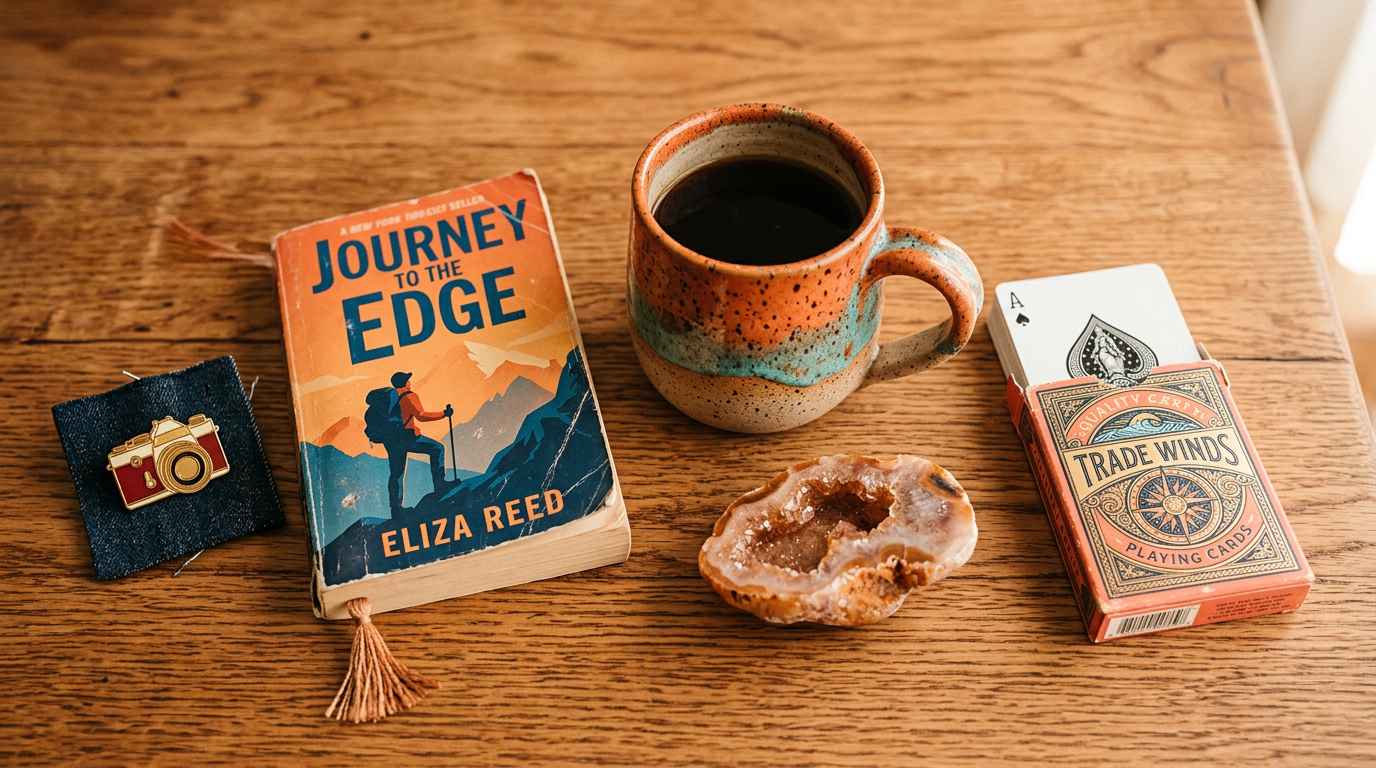
The red paperclip is iconic, but it’s not mandatory. The key is to start with something—anything. However, some items are better starters than others. Your goal is to get the ball rolling with a quick, successful first trade to build momentum.
Here's what to look for in a great starter item:
- Low Emotional Attachment: Don’t start with your grandfather’s watch. You need to be ready to part with it.
- Easy to Transport: Your first item should be small and easy to carry. You don’t want to be figuring out freight logistics for your first swap.
- Has a Story or Hook: Is it unique? Visually interesting? Funny? An item with a hook makes for a better conversation starter. “Want to trade for this cool pen?” is better than “Want to trade for a pen?”
- Broad Appeal: An item that many different people might find useful or interesting is better than something highly specific.
Struggling for ideas? Check out our list of the best starter items for a trade up. Think about a popular paperback book, a novelty mug, a functional but basic electronic gadget, or a unique piece of costume jewelry. Start with something you already own that’s just taking up space.
Step 3: Find Your Trades and Master the Pitch
Now for the action. You have your item, your goal, and your rules. It’s time to find a trading partner. In the old days, this meant posting on Craigslist and hoping for the best or literally knocking on doors. That’s the hard way.
The world has changed. The best way to find people who actually want to trade is to go where the traders are.
This is where Flipuz comes in. Our entire platform is built for one thing: trading items. No marketplace noise, no 'is this still available?' ghosts. You post your item. You swipe through items other people want to trade. When you both swipe right, it’s a match. It’s a targeted, efficient system designed to connect you with motivated traders, fast.
Crafting Your Pitch
Whether you're messaging someone on Flipuz or talking to them in person, your pitch matters. Don’t just say, “Trade?”
Sell the journey. Tell them what you’re doing. “Hey, I’m on a mission to trade this up to a car! Your item would be the next amazing step in my journey. You’d be a part of the story.”
This reframes the entire interaction. It’s not just a transaction anymore; it’s a collaboration. You’re giving them a chance to participate in something fun and interesting. People love a good story, and you’re inviting them to be a character in yours. Many successful traders find that people will trade for an item of equal or even slightly lower monetary value just to be part of the adventure.
Always be respectful, transparent, and safe. When meeting to trade, choose a public place and follow basic safety guidelines. Trust your gut.

Step 4: Scale, Document, and Close the Deal
As you complete more trades, the value of your items will increase. Trading a pen for a doorknob is simple. Trading a motorcycle for a used boat is more complex. Your strategy needs to evolve.
Leveling Up Your Trades
With higher-value items, the pool of potential traders shrinks, but the stakes get higher. You'll need to do more research. What is the real market value of your item? What are its flaws? Be completely honest about the condition of your item to build trust. When you’re trading for things like vehicles or electronics, inspections become critical.
At this stage, your documentation becomes even more important. A clear and public record of your trades proves your item's provenance and your reliability as a trader. You're not some random person with a boat; you're 'the trade-up guy/gal,' and people have seen you flip your way from a paperclip to get here.
This is where you can look at trade up success stories for inspiration on how others have navigated these bigger, more complex swaps.
Ride the Momentum
Keep your story alive. Post regular updates on social media. Share the highs and the lows. Did you get a terrible trade offer? Post it. Did you just land an incredible trade? Celebrate it publicly. Your audience will grow, and with it, your opportunities. You never know who’s watching. The right person with the perfect item for you might just discover you through a shared post.
Ready to Start Your Own Trade Up Challenge?
Stop watching from the sidelines. The adventure of turning nothing into something is waiting for you. The concept is proven. The tools are available. The only thing missing is you.
You don’t need permission. You don’t need an invitation. You just need to start.
Define your goal. Find a small item in your house you no longer need. And get on Flipuz.
Your first match could be minutes away. Stop dreaming and start doing. Your legendary trade up journey is just a swipe away. Download Flipuz and start your challenge today.
FAQ
What are the best items to start a trade up challenge with?
Start small, simple, and interesting. Think of things with broad appeal that are easy to carry, like a popular book, a unique coffee mug, a vintage pin, or a small, functional gadget. The key is to choose something you're not emotionally attached to and that can start a conversation. Avoid generic or low-quality items.
How do you find people to trade with?
While you can use old-school methods like Facebook Marketplace or Craigslist, they're not optimized for bartering. The most efficient way is to use a dedicated trading app like Flipuz. The platform is designed to connect you specifically with other people who want to trade items, removing the noise and frustration of traditional classifieds sites.
Is the trade up challenge legal and safe?
Yes, bartering is a perfectly legal form of commerce. However, for high-value items, you might need to consider tax implications, which vary by location. As for safety, always apply common sense. Meet in public, well-lit places. Tell someone where you're going. For large items, bring a friend. Trust your instincts and never feel pressured into a trade you're not comfortable with.
How long does a successful trade up challenge take?
There's no set timeline. Kyle MacDonald's famous trade from a paperclip to a house took one year and 14 trades. Other challenges, especially on platforms like TikTok, can move much faster through viral exposure. The duration depends on your goal, your strategy, the desirability of your items, and a bit of luck. Focus on making good trades, not on speed.
Stop reading. Start trading.
Pick a dream — house, car, Rolex, MacBook. Drop a starter item. Swipe. Flipuz handles the rest.