
 Trading Guides
The Trade Up Game: Your Guide to Winning Big Without Cash
You've heard the stories—a single red paperclip traded up for a house. This isn't a myth; it's the trade up game, and you can play, too.
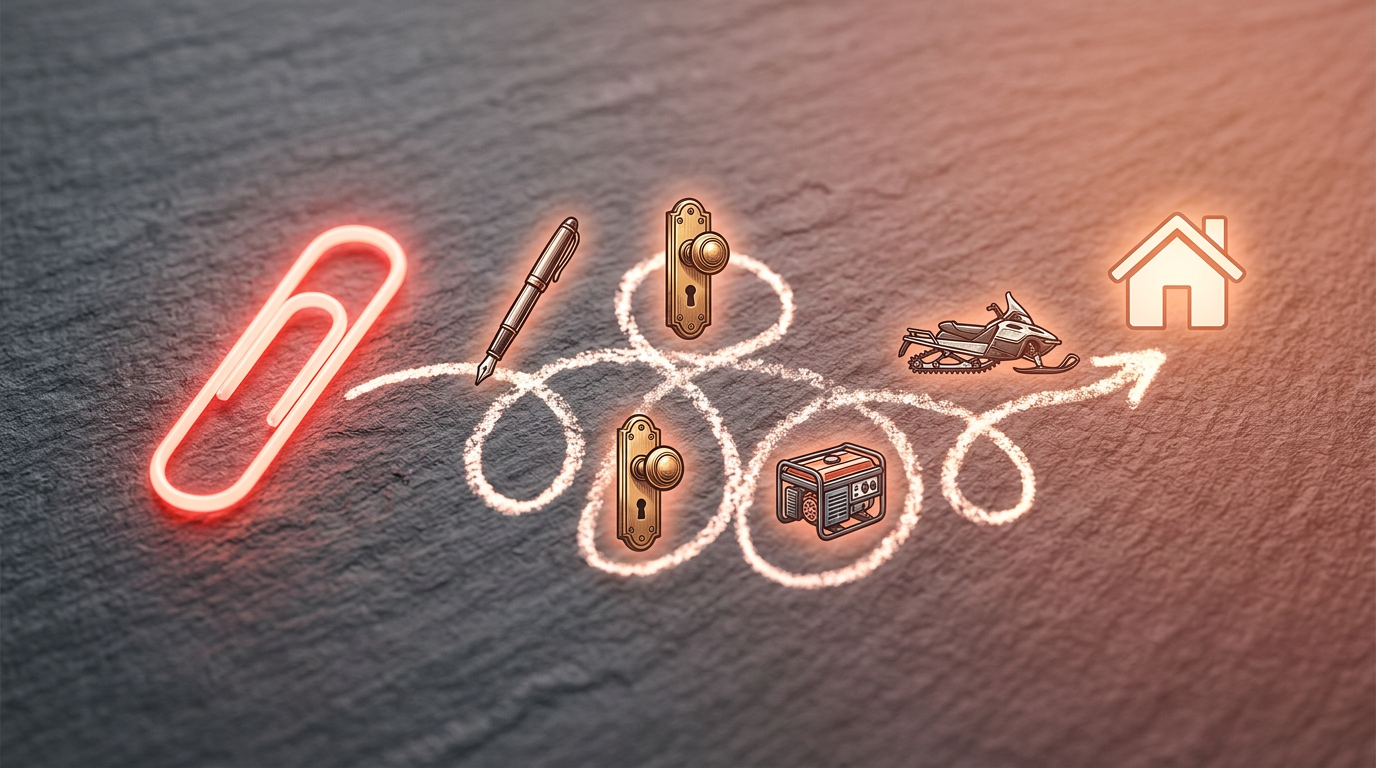
You have something small. A pen, a keychain, maybe even a single red paperclip. You also have a goal. A big one. A new car, a down payment on a house, that Rolex you’ve been eyeing. The path between those two points seems impossible, separated by a mountain of cash you don’t have.
Forget the cash. The path isn’t money. It’s value. It’s strategy. It’s the trade up game.
This isn't a fantasy. It’s a real-life item swapping game that turns everyday objects into incredible assets. It’s about leveraging psychology, understanding value, and making smart moves. The most famous player, Kyle MacDonald, turned one red paperclip into a house in just 14 trades. He didn't have a secret formula. He just understood the game.
Now, it’s your turn. This is your guide to mastering the trade up game, from your first move to your final, life-changing swap. Forget what you think you know about bartering. This is bigger.
What Exactly is the Trade Up Game?
At its core, the trade up game is a sequence of trades where you swap an item for another item of slightly higher perceived value. You repeat this process, with each trade acting as a step up a ladder. The goal is to climb that ladder until you reach an item of significant worth—your ultimate prize.
This isn't about finding someone who thinks your ballpoint pen is worth a sports car. It's about finding someone who needs a pen and has, say, a cool-looking novelty mug they never use. That mug is more interesting, has a better story, and is more valuable to the next person you trade with. That is the engine of the barter game: perceived value.
The classic tale, which you can read more about in our breakdown of the red paperclip trade, started with a simple question: what if you could barter your way from the smallest possible thing to the biggest possible thing? Kyle MacDonald found someone willing to trade his paperclip for a fish-shaped pen. He then traded that pen for a handmade doorknob. The doorknob became a camping stove. The stove became a generator. Each step was a small, logical upgrade. No cash exchanged hands. The generator eventually led to a party, which led to a celebrity encounter, which led to a movie role, which he finally traded for a two-story farmhouse in Kipling, Saskatchewan.
He proved the model. He created the blueprint. In his day, he used Craigslist and shoe leather. You have something better. You have an app designed specifically for this. The Flipuz trading game gamifies the entire process, putting thousands of potential trades right in your pocket. No more cold-emailing strangers. Just swipe, match, and swap.
The Rules of the Game (And How to Win)
The trade up challenge seems simple, but winning requires more than just luck. The unwritten rules are your strategic advantage.
Rule #1: No Cash Allowed
This is the cardinal rule. The moment money enters the equation, it’s no longer a trade; it’s a sale. The entire challenge is built on the principle of trading pure value for pure value. This forces you to be creative and focus on what people want, not just what an item is worth in dollars.
Rule #2: Always Trade UP in Perceived Value
Your goal in every single transaction is to acquire an item that is more desirable, more unique, or more useful than the one you're giving away. Notice the word: perceived. A vintage band t-shirt might be monetarily worthless to one person but priceless to a collector. A spare bicycle pump is junk in a closet but a lifesaver to a cyclist with a flat tire. Your job is to find the person who perceives your item as a solution or a treasure. That’s how you climb.
Rule #3: The Story is Part of the Value
When you trade, you aren’t just trading an object. You’re trading a story. “This is a doorknob” is boring. “I traded a fish-shaped pen for this one-of-a-kind, hand-sculpted doorknob on my journey to trade up to a car” is a narrative. People buy into the journey. Your item becomes a piece of a legend. Use that. Document your trades. Share your progress. On Flipuz, your profile becomes the home for your story, making each item you list more compelling.
Rule #4: Know When to Hold and When to Fold
You won’t trade up every day. Sometimes you’ll get an item that’s a tough swap. This is the “grind” phase of the item swapping game. Don’t panic and trade down just to make a move. Patience is a weapon. Wait for the right person and the right offer. The perfect trade is worth waiting for. Check out our official trade up challenge rules for a solid framework to keep you on track.

Your First Move: Picking a Starter Item
Every grand journey starts with a single step. In the trade up game, that step is your first item. What should you pick? Don't overthink it.
The beauty of the paperclip challenge is its humility. Start with something small, common, and almost valueless.
Why? Three reasons:
- Low Stakes: If you can't trade a paperclip, who cares? You've lost nothing. It removes the fear of failure.
- Universal Recognition: Everyone knows what a paperclip, a pen, or a bottle cap is. There's no need to explain it.
- The 'Wow' Factor: The smaller you start, the more impressive your journey. Trading a $100 item for a $120 item is expected. Trading a paperclip for a $20 item is magic.
Need some inspiration? Don't just grab any old thing. Think about what might have a tiny spark of interest. We have a whole guide to the best starter items for a trade up, but here are a few ideas to get your mind working:
- A unique coin: Maybe a foreign coin from a trip or an old wheat penny.
- A book with a compelling premise: A paperback you've finished.
- A novelty pen or keychain: Something with a bit more personality than a standard Bic.
- A single, cool-looking Lego brick.
Your first trade will likely be with someone who is more amused by the game than in need of your item. They are trading for the fun of participating. This is your entry point. Your first “up-trade” validates the entire process and gives you the momentum to hunt for the next one. Once you’ve made that first swap, you’re no longer a dreamer. You’re a player.
The Psychology of a Master Trader
The trade up game is 20% items and 80% psychology. You need to understand what makes people tick to become a master trader. It’s not about manipulation; it’s about empathy and strategy.
First, master the art of the pitch. When you offer a trade, don't just show the item. Sell the benefit. Don't say, “Want to trade for my camping stove?” Say, “I see you like hiking. This camping stove would be perfect for your next trip, and it’s way lighter than the one you have listed.” Connect your item to their life.
Second, understand that value is subjective and situational. The person who needs your item right now will value it far more than someone who might need it “someday.” A dead car battery is a worthless lump of lead and acid until your car won't start. Then, a working battery is worth its weight in gold. Your job as a trader is to find the intersection of your item and someone else's immediate need or intense desire.
Third, project confidence and vision. People are drawn to others with a clear goal. When you tell them you're on a quest to trade up to a car or a house, they don't just see your item. They see your ambition. They want to be a part of it. Your quest gives their unused item a higher purpose. It becomes a chapter in your success story. Suddenly, their old snowboard isn't just collecting dust; it's helping you get one step closer to your dream.
This might sound intimidating, but a platform like Flipuz makes it easier. It’s a gamified bartering experience where you can quickly see what others have and what they want. The swipe-match mechanism, inspired by dating apps, removes the awkwardness of cold-pitching. It's a low-pressure environment to practice the psychology of trading up.
From Paperclip to Payoff: Charting Your Course
Starting is easy. Finishing is legendary. The middle part—the dozen or so trades between your starter item and the final prize—is where most people quit. This is how you power through.
Set a clear, audacious goal. Don't just trade for the sake of trading. Pick your mountain. Is it a specific vehicle? A down payment on a house? A piece of art? Having a tangible dream fuels your motivation when you're stuck with a hard-to-trade item. Flipuz lets you declare your 'Dream' so other users know what you’re chasing.
Next, embrace the plateaus. You will get stuck. You'll have an item that nobody seems to want. This is a test of your patience and creativity. When this happens, rethink your audience. Who would value this? Where do they hang out? Maybe the item isn't the problem; your pitch is. Or maybe you're pitching to the wrong people. Don't be afraid to hold an item for weeks or even months until the perfect trade partner appears.
Use the community to your advantage. On Flipuz, you're not alone. You can see what other people are trading and how they are succeeding. Check the leaderboard to see who is making the most trades. Learn from their moves. A rising tide lifts all ships, and seeing someone else succeed in the barter game is powerful motivation.
This Is Your Game to Win
The trade up game is more than just a way to get free stuff. It’s a masterclass in sales, negotiation, and human connection. It’s an adventure where you are the hero. Every swipe, every match, and every swap is a step forward on a journey you create.
You don’t need money. You don’t need experience. You just need to start.
That thing you want? It’s waiting for you. It’s at the end of a chain of trades that begins today, with one small item and one big decision. Are you ready to play?
Stop dreaming and start swapping. Join the Flipuz community and make your first trade now.
FAQ
Is the trade up game legal?
Absolutely. Bartering is a completely legal form of commerce as long as you're trading legal items you own. It's simply an exchange of goods without the use of currency. For very high-value items, like cars or property, you'll still need to follow standard title transfer procedures and consider any tax implications, but the act of trading itself is perfectly legitimate.
How long does it take to trade up to something big?
There's no set timeline. It depends on your goal, your strategy, the items you acquire, and a bit of luck. Kyle MacDonald's famous trade from a paperclip to a house took about a year and 14 trades. Others might take more or less time. The key is persistence, not speed. Focus on making good, strategic trades rather than rushing the process.
What if I get stuck with an item I can't trade?
Everyone hits a plateau. If you have an item that isn't moving, it's time to get creative. Re-photograph it. Rewrite the description. Think about a different type of person who might want it and try to find them. You can also try bundling it with a smaller item or simply holding onto it and waiting for the right person to come along. Patience is a critical skill in this game.
Can you really play the trade up game on an app?
Yes, and it's a game-changer. Apps like Flipuz are built for this. Instead of the slow, manual process of posting on forums or Craigslist, an app creates a dedicated marketplace of people who are all there to trade. The swipe-to-match feature makes it fast and easy to find potential trade partners, turning what used to take weeks of searching into minutes of swiping.
Stop reading. Start trading.
Pick a dream — house, car, Rolex, MacBook. Drop a starter item. Swipe. Flipuz handles the rest.